Have you ever found yourself writing an email, an essay, or a social media caption and realized you have used the word “cohesive” three times in two paragraphs? It happens to everyone. You know what you want to say, but repeating the same word makes your writing feel flat and uninspired. Finding the right synonyms of cohesive can transform your sentences from repetitive to refined. Choosing the precise word for your specific situation improves clarity, sets the right tone, and makes your communication more effective. Whether you are drafting a business report, editing a resume, or writing a blog post, the word you choose matters more than you might think.
What Are the Best Synonyms of “Cohesive”?
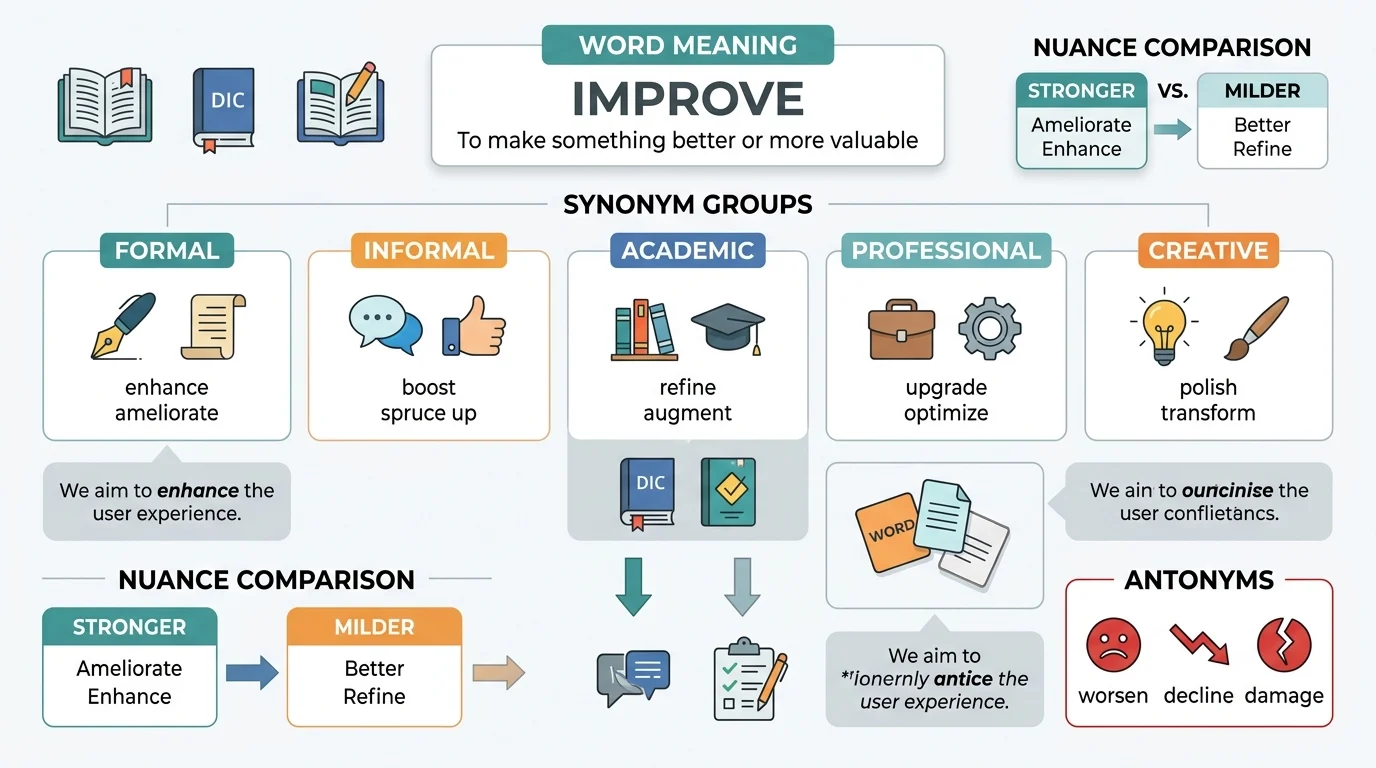
Cohesive means sticking together firmly or forming a well‑integrated whole. The best synonyms depend on your context: for professional writing, use unified or integrated; for casual conversation, try close‑knit or together; for academic work, choose coherent or systematic; and for creative writing, consider harmonious or seamless.
Meaning, Tone, and Context
Simple Definition
Cohesive describes something that sticks together literally or figuratively. It can refer to physical substances that adhere, such as glue or clay, or to abstract things like teams, arguments, designs, and communities that function as a united whole.
Part of Speech
Adjective
Overall Tone
Neutral to positive. The word carries a favorable connotation because it implies strength, organization, and effective collaboration.
Formality Level
Semi‑formal to formal. “Cohesive” is common in academic writing, business communication, and professional contexts. It sounds more analytical and polished than everyday alternatives like “sticky” or “together.”
Common Uses
Native English speakers use “cohesive” most often to describe:
- Teams, groups, and organizations that work well together
- Arguments, narratives, and writing that flow logically
- Designs, aesthetics, and visual presentations that feel unified
- Plans and strategies with interconnected parts
Word Forms
- Noun: cohesion
- Adjective: cohesive
- Adverb: cohesively
- Opposite form: incohesive (less common) or non‑cohesive
When and How to Use “Cohesive”
Choose “cohesive” when you want to emphasize that separate parts work together as a single, effective unit. The word works well in both literal and figurative contexts.
Professional
“The marketing team presented a cohesive strategy that aligned social media, email, and paid advertising campaigns.”
Academic
“The researcher’s argument was cohesive, with each chapter building logically on the previous one.”
Workplace
“After the restructuring, the department became more cohesive and met its quarterly goals ahead of schedule.”
Personal
“Their shared values made the group cohesive, even though they came from different backgrounds.”
“I have attached a revised draft. Please review it to ensure the sections feel cohesive before we send it to the client.”
Resume
“Built a cohesive sales process that increased revenue by 25 percent across three regional offices.”
“We chose a cohesive color palette for our brand to make every post instantly recognizable.”
Best Synonyms of “Cohesive”
No synonym is identical in every situation. The best choice depends on your audience, purpose, and the specific nuance you want to convey.
- Professional writing: unified — emphasizes that diverse elements have been brought together into one entity
- Academic writing: coherent — stresses logical consistency and clarity
- Business communication: integrated — highlights that different parts are combined to function as a whole
- Casual conversation: close‑knit — suggests strong personal bonds within a group
- Emotional writing: harmonious — adds a sense of beauty, balance, and positive feeling
- Creative writing: seamless — implies smooth, invisible connections between parts
- Resume writing: collaborative — showcases teamwork and cooperation
- Workplace communication: coordinated — focuses on smooth, efficient interaction
- Stronger meaning: consolidated — suggests firm, permanent unity
- Softer meaning: consistent — implies reliable alignment without intense bonding
When Not to Use “Cohesive”
When the word sounds too general
If you are describing a team that simply gets along, “cohesive” might be too broad. It does not specify how they work together.
- Less effective: “We have a cohesive team.”
- Better: “We have a collaborative team that shares feedback openly.”
The word sounds too vague
In technical or scientific writing, “cohesive” can lack precision.
- Less effective: “The material is cohesive.”
- Better: “The material exhibits strong adhesive properties.”
When the word sounds too formal
Casual conversation or text messages, “cohesive” can feel stiff and out of place.
- Less effective: “Our friend group is very cohesive.”
- Better: “Our friend group is really tight.”
When the word sounds too weak
If you want to emphasize an unbreakable bond, “cohesive” may not carry enough weight.
- Less effective: “The alliance was cohesive.”
- Better: “The alliance was inseparable.”
Words Commonly Confused With “Cohesive”
Cohesive vs. Coherent
- Difference: Cohesive focuses on connection and unity between parts. Coherent focuses on overall clarity and logical sense.
- When to Use It: Use cohesive when the question is “Do the parts hold together well?” Use coherent when the question is “Does it make sense overall?”
- Example (cohesive): “The paragraphs had smooth transitions and felt cohesive.”
- Example (coherent): “The argument was coherent from start to finish.”
Vs. Unified
- Difference: Unified is broader and more everyday. Cohesive sounds more formal and analytical.
- When to Use It: Use unified in general writing. Use cohesive in academic or professional contexts.
- Example (cohesive): “The committee presented a cohesive proposal.”
- Example (unified): “The country remained unified during the crisis.”
Cohesive vs. Integrated
- Difference: Integrated emphasizes that different parts have been combined to form a whole. Cohesive emphasizes that parts stick together naturally.
- When to Use It: Use integrated when discussing systems, processes, or diverse elements brought together. Use cohesive for groups or narratives.
- Example (cohesive): “The novel had a cohesive plot.”
- Example (integrated): “The software integrated data from multiple sources.”
Cohesive vs. Adhesive
- Difference: Adhesive is primarily literal and refers to physical stickiness. Cohesive can be literal or figurative.
- When to Use It: Use adhesive for glue, tape, or physical substances. Use cohesive for abstract unity.
- Example (cohesive): “The team was cohesive.”
- Example (adhesive): “The adhesive tape held the papers together.”
Vs. Consistent
- Difference: Consistent means uniform and unchanging over time. Cohesive means parts fit together well.
- When to Use It: Use consistent for performance, quality, or behavior. Use cohesive for structure or group dynamics.
- Example (cohesive): “The design had a cohesive look.”
- Example (consistent): “She delivered consistent results every quarter.”
Close‑knit
- Difference: Close‑knit is informal and emphasizes emotional bonds. Cohesive is formal and can describe non‑emotional connections.
- When to Use It: Use close‑knit for families, friend groups, or small teams. Use cohesive for formal or professional contexts.
- Example (cohesive): “The organization had a cohesive structure.”
- Example (close‑knit): “They are a close‑knit group of friends.”
Best Synonyms of “Cohesive” by Context
| Context | Best Synonym | Why It Works | Example |
|---|---|---|---|
| Formal writing | Unified | Sounds professional and authoritative | “The board presented a unified vision for the company’s future.” |
| Academic writing | Coherent | Emphasizes logical clarity and consistency | “The study presented a coherent theoretical framework.” |
| Professional communication | Integrated | Highlights combination of diverse elements | “Our integrated approach combines sales, marketing, and product development.” |
| Business emails | Aligned | Suggests shared goals and mutual understanding | “We need to ensure our objectives are aligned before the next meeting.” |
| Resume writing | Collaborative | Showcases teamwork and cooperation | “Led a collaborative effort to redesign the customer onboarding process.” |
| Workplace communication | Coordinated | Emphasizes smooth, efficient teamwork | “The coordinated response minimized downtime during the system outage.” |
| Casual conversation | Tight | Informal and conversational | “Our squad is tight; we have each other’s backs.” |
| Everyday speaking | Together | Simple, clear, and widely understood | “They are a together group that gets things done.” |
| Creative writing | Seamless | Suggests smooth, invisible connections | “The transitions between scenes were seamless.” |
| Storytelling | Interconnected | Emphasizes meaningful relationships between elements | “The characters’ lives were interconnected in surprising ways.” |
| Emotional writing | Harmonious | Adds warmth, balance, and positive feeling | “Their harmonious partnership was the key to the project’s success.” |
| Strong emphasis | Consolidated | Suggests firm, permanent unity | “The consolidated team delivered record results.” |
| Mild tone | Consistent | Implies reliable alignment without intense bonding | “The feedback has been consistent across all departments.” |
| Social media captions | Curated | Suggests intentional, thoughtful arrangement | “Our curated feed features a cohesive aesthetic.” |
How to Choose the Best Synonym of “Cohesive”
Choosing the right synonym starts with asking yourself a few simple questions.
What are you describing?
- A team or group? Consider unified, close‑knit, or collaborative.
- An argument or piece of writing? Consider coherent, logical, or well‑structured.
- A design or visual presentation? Consider harmonious, seamless, or integrated.
- A plan or strategy? Consider coordinated, aligned, or consistent.
Who is your audience?
- Formal (academic, business, professional): Choose unified, integrated, or coherent.
- Informal (friends, social media, casual conversation): Choose tight, together, or close‑knit.
What emotional tone do you want?
- Neutral and factual: Choose unified or integrated.
- Warm and positive: Choose harmonious or close‑knit.
- Strong and emphatic: Choose consolidated or inseparable.
What is your purpose?
- To inform: Choose clear, straightforward words like consistent or unified.
- To persuade: Choose stronger words like coherent or integrated.
- To entertain or engage: Choose more vivid words like seamless or harmonious.
The best synonym is the one that communicates your intended message most clearly to your specific audience.
Real Life Examples of “Cohesive”
School
“The student council created a cohesive plan for the spring festival that included fundraising, promotion, and volunteer coordination.”
College
“Her essay was cohesive, with each paragraph supporting the central thesis without repetition.”
Workplace
“The new manager transformed a divided office into a cohesive unit that exceeded every target.”
Business
“We developed a cohesive brand identity that resonates across all customer touchpoints.”
“Please review the attached report and let me know if the findings feel cohesive before I share them with leadership.”
Resume
“Orchestrated cohesive marketing campaigns across digital, print, and social channels, increasing brand awareness by 40 percent.”
Conversation
“I love how cohesive this neighborhood is; everyone looks out for each other.”
Storytelling
“The author wove a cohesive narrative that kept readers engaged from the first page to the last.”
Blogging
“For a cohesive blog, choose a consistent voice and stick to a clear editorial calendar.”
“We use a cohesive filter on all our photos to make our Instagram feed instantly recognizable.”
18 Best Synonyms of “Cohesive”
| Synonym | Simple Meaning | Best Used For | Example Sentence |
|---|---|---|---|
| Unified | Brought together into one entity | Formal writing, professional reports | “The unified strategy helped the company regain market share.” |
| Integrated | Combined to form a whole | Business, systems, processes | “The integrated system reduced redundant tasks across departments.” |
| Coherent | Logically consistent and clear | Academic writing, arguments | “Her coherent argument convinced the review committee.” |
| Close‑knit | Bound by strong personal ties | Families, friend groups, small teams | “The close‑knit community supported each other through the crisis.” |
| Harmonious | Balanced and pleasing together | Creative writing, emotional contexts | “The harmonious blend of colors created a calming atmosphere.” |
| Seamless | Smooth, with no visible gaps | Design, transitions, user experience | “The seamless integration of features made the app intuitive.” |
| Collaborative | Working together cooperatively | Resumes, teamwork descriptions | “The collaborative effort produced award‑winning results.” |
| Coordinated | Well‑organized and synchronized | Workplace, project management | “The coordinated launch involved teams in five countries.” |
| Consolidated | Firmly united and strengthened | Strong emphasis, business | “The consolidated divisions formed a more competitive entity.” |
| Consistent | Uniform and reliable over time | Performance, quality, feedback | “The consistent messaging built trust with customers.” |
| Aligned | Sharing common goals or direction | Business, strategy, emails | “Our aligned priorities made decision‑making faster.” |
| Interconnected | Mutually linked and dependent | Storytelling, complex systems | “The interconnected plot threads resolved beautifully in the finale.” |
| Solid | Strong, stable, and dependable | General use, informal | “They have a solid partnership that has lasted for years.” |
| Bonded | Connected by strong emotional ties | Personal relationships, teams | “The bonded group volunteered together every weekend.” |
| Together | Functioning as a single unit | Casual conversation, everyday use | “They are a together bunch that never misses a deadline.” |
| Systematic | Methodical and well‑organized | Academic, technical writing | “The systematic approach eliminated confusion and errors.” |
| Unified | Made into a single unit | General professional use | “The unified front presented a strong message to competitors.” |
| Congruent | In agreement or harmony | Formal, logical contexts | “The findings were congruent with the initial hypothesis.” |
Synonyms of “Cohesive” by Usage
Professional vs. Personal Synonyms
In workplaces, choose unified, integrated, or coordinated to sound competent and polished. In personal conversations, close‑knit, tight, or together feel more natural and warm.
Formal vs. Conversational Synonyms
Formal contexts like reports, essays, and presentations call for coherent, systematic, or congruent. Casual conversations and text messages are better served by tight, together, or solid.
Academic Synonyms
For research, essays, and academic discussions, use coherent, systematic, or congruent. These words sound more authoritative and precise.
Professional and Business Synonyms
For resumes, interviews, meetings, and client communication, choose unified, integrated, coordinated, or aligned. These words convey competence and strategic thinking.
Creative and Literary Synonyms
For storytelling, fiction, and descriptive writing, use seamless, harmonious, or interconnected. These words add imagery and emotional depth.
Slang or Modern Synonyms
Tight” is the most common informal synonym. It works well in casual conversation and social media but should be avoided in professional or academic writing.
Strongest to Mildest Synonyms
Mild
- Consistent
- Aligned
- Together
Moderate
- Unified
- Integrated
- Coordinated
- Collaborative
Strong
- Coherent
- Consolidated
- Seamless
- Interconnected
Very Strong
- Inseparable
- Indissoluble
- Unified (with emphasis)
Emotional vs. Neutral Synonyms
Emotional Synonyms
- Harmonious — adds warmth and beauty
- Close‑knit — suggests affection and loyalty
- Bonded — implies deep emotional connection
- Seamless — creates a sense of effortless perfection
Use these when you want to evoke feeling or create a positive impression.
Neutral Synonyms
- Unified — simply states that parts are joined
- Integrated — describes combination without emotion
- Coordinated — focuses on organization
- Consistent — emphasizes reliability
Use these when you want to communicate facts without adding emotional weight.
Antonyms of “Cohesive”
| Antonym | Meaning | Example Sentence |
|---|---|---|
| Fragmented | Broken into separate parts | “The fragmented team struggled to meet its deadlines.” |
| Disjointed | Lacking logical connection | “His disjointed argument confused the audience.” |
| Divided | Split into opposing groups | “The divided board could not agree on a budget.” |
| Disconnected | Not joined or related | “The disconnected sections made the report hard to follow.” |
| Scattered | Spread out without order | “The scattered efforts produced inconsistent results.” |
| Incoherent | Not logical or clear | “Her incoherent explanation raised more questions than answers.” |
| Detached | Separated or uninvolved | “The detached group showed little interest in collaboration.” |
| Dispersed | Spread over a wide area | “The dispersed workforce made communication difficult.” |
| Loose | Not firmly held together | “The loose arrangement fell apart under pressure.” |
| Separated | Kept apart from others | “The separated departments operated in silos.” |
| Unconnected | Having no relation or link | “The unconnected ideas left the reader confused.” |
| Isolated | Alone or cut off from others | “The isolated team missed key updates.” |
| Chaotic | In complete disorder | “The chaotic process wasted time and resources.” |
| Inconsistent | Not uniform or reliable | “The inconsistent messaging damaged the brand.” |
| Disunited | Lacking unity or agreement | “The disunited coalition failed to pass the legislation.” |
Comparison: “Cohesive” vs Similar Words
Cohesive vs. Coherent
Main Difference: Cohesive focuses on connection and unity between parts. Coherent focuses on overall clarity and logical sense.
Which Is Stronger? Coherent is stronger for logical arguments. Cohesive is stronger for group dynamics.
Which Is More Formal? Both are formal, but coherent is more common in academic writing.
When to Use Each: Use cohesive when parts are well connected. Use coherent when the whole makes sense.
- Cohesive: “The team’s cohesive effort produced a flawless presentation.”
- Coherent: “The presentation was coherent from the introduction to the conclusion.”
Cohesive vs. Unified
Main Difference: Unified is broader and more everyday. Cohesive sounds more formal and analytical.
Which Is Stronger? Cohesive can imply a stronger, more organic connection.
Which Is More Formal? Cohesive is more formal.
When to Use Each: Use unified in general writing. Use cohesive in academic or professional contexts.
- Cohesive: “The committee presented a cohesive proposal.”
- Unified: “The country remained unified during the crisis.”
Cohesive vs. Integrated
Main Difference: Integrated emphasizes combining different parts. Cohesive emphasizes natural sticking together.
Which Is Stronger? Integrated suggests deliberate effort. Cohesive suggests inherent unity.
Which Is More Formal? Both are formal.
When to Use Each: Use integrated for systems and processes. Use cohesive for groups and narratives.
- Cohesive: “The novel had a cohesive plot.”
- Integrated: “The software integrated data from multiple sources.”
Cohesive vs. Adhesive
Main Difference: Adhesive is literal (physical stickiness). Cohesive can be literal or figurative.
Which Is Stronger? Adhesive is more specific for physical contexts.
Which Is More Formal? Adhesive is technical; cohesive is more versatile.
When to Use Each: Use adhesive for glue and physical substances. Use cohesive for abstract unity.
- Cohesive: “The team was cohesive.”
- Adhesive: “The adhesive tape held the papers together.”
Cohesive vs. Consistent
Main Difference: Consistent means uniform over time. Cohesive means parts fit together.
Which Is Stronger? Cohesive suggests active connection. Consistent suggests passive uniformity.
Which Is More Formal? Both are formal.
When to Use Each: Use consistent for performance or quality. Use cohesive for structure or group dynamics.
- Cohesive: “The design had a cohesive look.”
- Consistent: “She delivered consistent results every quarter.”
Cohesive vs. Close‑knit
Main Difference: Close‑knit is informal and emotional. Cohesive is formal and can be non‑emotional.
Which Is Stronger? Close‑knit is stronger emotionally.
Which Is More Formal? Cohesive is more formal.
When to Use Each: Use close‑knit for personal relationships. Use cohesive for professional contexts.
- Cohesive: “The organization had a cohesive structure.”
- Close‑knit: “They are a close‑knit group of friends.”
Common Phrases and Expressions with “Cohesive”
Team
- Meaning: A group that works well together as a united unit
- Example: “The cohesive team completed the project two weeks ahead of schedule.”
Cohesive strategy
- Meaning: A plan with interconnected, mutually reinforcing parts
- Example: “We need a cohesive strategy that aligns marketing, sales, and product development.”
Unit
- Meaning: A group or entity that functions as one
- Example: “The soldiers operated as a cohesive unit during the mission.”
Look
- Meaning: A visual style where all elements match and flow together
- Example: “The designer created a cohesive look by using complementary colors throughout the room.”
Narrative
- Meaning: A story or argument where all parts connect logically
- Example: “The documentary presented a cohesive narrative that kept viewers engaged.”
Force
- Meaning: A factor that holds things together
- Example: “Shared values acted as a cohesive force within the organization.”
Cohesive whole
- Meaning: A complete entity formed from connected parts
- Example: “The editor transformed scattered notes into a cohesive whole.”
Common Mistakes to Avoid
1: Choosing a vague synonym instead of a precise one
- Incorrect: “We have a cohesive team.” (when you mean they collaborate well)
- Better: “We have a collaborative team that shares feedback openly.”
- Why: “Collaborative” specifies how they work together, making your statement more informative.
2: Confusing “cohesive” with “coherent”
- Incorrect: “Her speech was cohesive.” (when you mean it made logical sense)
- Better: “Her speech was coherent from start to finish.”
- Why: Coherent focuses on clarity and logic; cohesive focuses on connection and unity.
3: Using an informal synonym in formal writing
- Incorrect: “The board presented a tight proposal.”
- Better: “The board presented a unified proposal.”
- Why: “Tight” is too casual for professional or academic contexts.
4: Selecting an overly dramatic synonym
- Incorrect: “The team was inseparable.” (when you simply mean they work well together)
- Better: “The team was highly cohesive.”
- Why: “Inseparable” suggests an unbreakable bond that may be exaggerated for most workplace situations.
5: Repeating the same word too often
- Incorrect: “The cohesive team developed a cohesive plan and presented a cohesive report.”
- Better: “The unified team developed an integrated plan and presented a coherent report.”
- Why: Varying your word choice makes your writing more engaging and professional.
6: Choosing a synonym with the wrong emotional tone
- Incorrect: “The harmonious department met its targets.” (in a neutral business report)
- Better: “The unified department met its targets.”
- Why: “Harmonious” adds emotional warmth that may not suit a straightforward business update.
7: Using slang in academic or professional writing
- Incorrect: “The research team was tight.”
- Better: “The research team was cohesive.”
- Why: “Tight” is informal and undermines the credibility of academic or professional work.
Frequently Asked Questions
1. What are the best synonyms of “cohesive”?
The best synonyms depend on your context. Formal writing, choose unified or integrated. For casual conversation, choose close‑knit or tight. For academic work, choose coherent.
2. What are the best formal synonyms of “cohesive”?
The best formal synonyms include unified, integrated, coherent, coordinated, and consolidated. These words sound professional and precise in academic, business, and official contexts.
3. What are common informal synonyms of “cohesive”?
Common informal synonyms include tight, together, close‑knit, and solid. These words work well in casual conversation, text messages, and social media posts.
4. What is another word for “cohesive” in professional writing?
In professional writing, use unified, integrated, or coordinated. These words convey competence, strategic thinking, and effective teamwork.
5. What is the difference between “cohesive” and “coherent”?
Cohesive focuses on connection and unity between parts. Coherent focuses on overall clarity and logical sense. Use cohesive for teams and designs. Use coherent for arguments and explanations.
6. What is the opposite of “cohesive”?
Common opposites include fragmented, disjointed, divided, disconnected, and scattered. These words describe things that lack unity, connection, or logical order.
Conclusion
Cohesive describes things that stick together firmly and form a well‑integrated whole. Whether you are writing about a team, a design, an argument, or a plan, the right synonym can make your message clearer and more impactful. No single synonym works perfectly in every situation. The best choice depends on your audience, your purpose, and the specific nuance you want to convey. Formal writing, choose unified or integrated. For casual conversation, choose close‑knit or tight. Academic work, choose coherent. For creative writing, choose seamless or harmonious. The next time you reach for “cohesive,” pause and ask yourself which synonym truly fits. Your readers will notice the difference. And remember, a strong vocabulary is built one word at a time. Keep learning, keep practicing, and keep choosing words with intention.