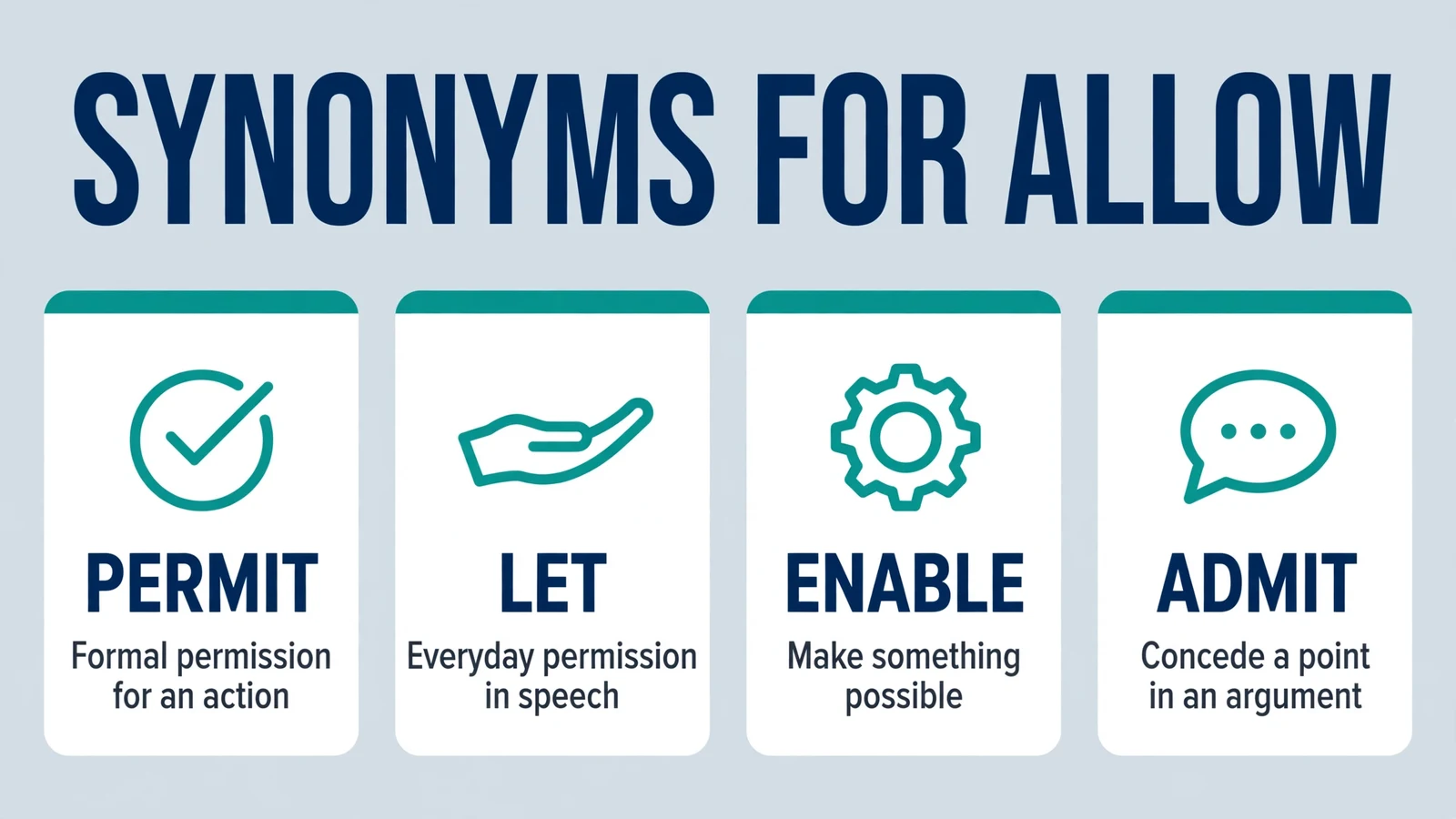
Few verbs work as hard as allow. A teacher allows a late assignment, a new law allows earlier voting, and a debater allows that the other side has a point. Each sentence asks the verb to do a different job, so one replacement cannot fit them all. The strongest synonyms for allow are permit and let for permission, authorize and sanction for official approval, enable and empower for making something possible, and admit or concede when you give ground in an argument. This guide sorts more than fifty checked alternatives by sense, so you can match the word to the job. It also flags the tone of each option, because permit in a text message sounds stiff, while let in a legal notice sounds far too casual.
Quick Reference: The Best Synonyms for Allow
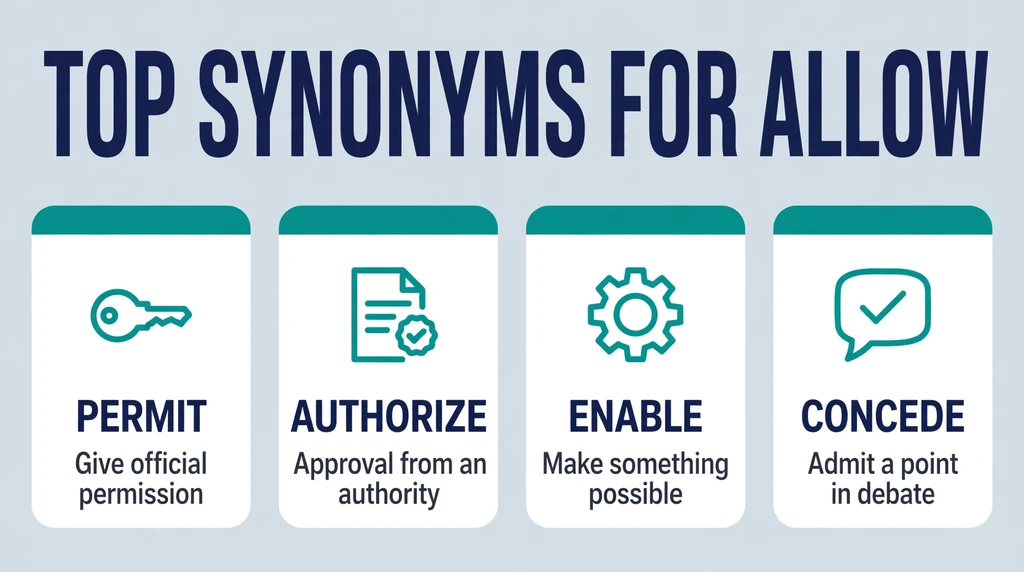
The table below gathers the most useful replacements in one place. The sense column matters most, since a word from the wrong row will change your meaning. Later sections explain each group with examples.
| Word | Meaning in one line | Best for / tone |
|---|---|---|
| permit | give official permission for | formal, rules and signs |
| let | give permission in everyday speech | neutral, conversational |
| authorize | give power or approval as an authority | formal, official |
| sanction | approve officially | formal, can also mean a penalty |
| license | give formal permission, often by document | formal, legal |
| consent to | agree to something proposed | formal, polite |
| grant | give what was asked for | formal, generous tone |
| approve | say yes to a plan or request | neutral to formal |
| endorse | support publicly or officially | formal, business |
| warrant | give a right or a reason to act | formal, legal |
| OK | give casual approval | informal, spoken |
| give the green light | approve a plan so it can start | neutral, projects |
| give the go-ahead | allow a plan to proceed | neutral, workplaces |
| tolerate | put up with something you dislike | neutral, negative shade |
| endure | bear something without stopping it | literary, patient tone |
| suffer | allow, in older or literary use | literary, old-fashioned |
| brook | tolerate, mostly in negatives | formal, literary |
| put up with | tolerate without complaining much | informal |
| enable | make something able or possible | neutral, ability |
| empower | give power or confidence to act | formal, positive |
| equip | give someone what they need to act | neutral, practical |
| qualify | make someone fit or eligible | formal, rules |
| admit | accept a point is true, often reluctantly | neutral, arguments |
| acknowledge | admit or recognize a fact | formal, careful |
| concede | give up a point in an argument | neutral, debate |
| recognize | accept something as true or valid | formal |
| allot | set aside a share of time or money | formal, planning |
| allocate | assign a share for a purpose | formal, budgets |
How to Use This Table
Pick your row by sense first and by tone second. If a word sits in the wrong sense group, no amount of formality will save the sentence. When two rows both fit, read your sentence aloud with each word in place. The one that sounds like something a careful speaker would say in that setting is almost always the right choice.
What Allow Means: Four Jobs in One Verb
Dictionaries split allow into clear senses, and the split explains why swapping words goes wrong so often. Cambridge puts the core idea simply: if you allow someone to do something, you give that person permission, or you do not stop the thing from happening. Merriam-Webster separates the verb into six related senses, and four of them cover almost every sentence you will write.
The Four Main Senses
The first sense is active permission. Someone with authority says yes, as in “The school allows phones in the lobby.” The second sense is passive. Nobody says yes, yet nobody steps in either, as in “He allowed the argument to drag on.” The third sense is about possibility. The subject is often a thing, not a person: “The new bridge allows trucks to reach the port.” The fourth sense belongs to discussion. When speakers allow that something is true, they admit a point, sometimes against their own side.
A Smaller Fifth Sense
Allow also means to set something aside. People allow two hours for traffic, or allow fifty dollars for repairs. This sense takes time, money, or room as its object, and its synonyms come from planning and budgets. You will find that group near the end of this guide, because it is easy to miss and easy to misuse.
Synonyms for Allow That Give Permission
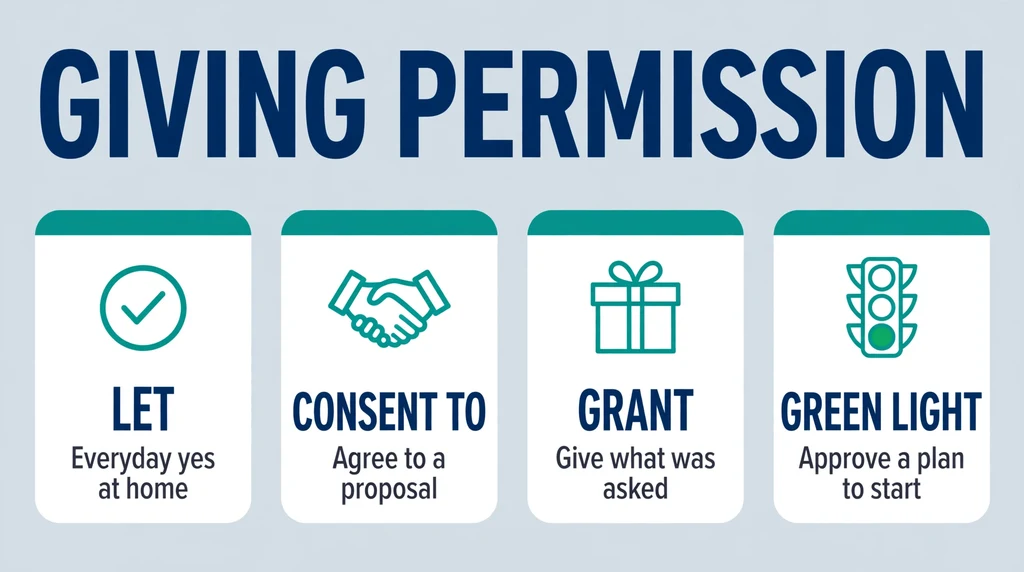
This is the sense most people want. A person, a rule, or an office says yes to an action. The words below all grant permission, yet they differ in warmth, formality, and how much authority the speaker holds. Start with the everyday words, then move toward formal ground.
Everyday Permission Words
Let is the closest everyday match. Parents let children stay up late, and friends let each other borrow books. It sounds warm and natural in speech, and it is the word most native speakers reach for first. Permit also gives permission, but it already leans formal, so it suits written rules better than kitchen-table talk. Leave works when permission means not interfering: “Leave him to finish the job his way.” Approve fits plans and requests that land on a desk, since a manager approves a budget or a leave request. Free, release, and liberate add the idea of removing a block, so they suit sentences where someone was held back before.
Consent and Agreement Words
Some synonyms stress agreement rather than authority. Consent to means a person agrees to something proposed to them, and it often appears in medical, legal, and formal personal contexts. Agree to is its plainer cousin, good for deals and arrangements of all sizes. Grant suggests a request that someone higher up has honored, as in “The court granted permission to appeal.” The word carries a generous shade, since the giver did not have to say yes. Assent to is a quiet, formal yes, common in reports and minutes. Use these words when the permission flows from a request, not from a rulebook.
Phrases That Give Permission
English also allows with phrases. Give the green light and give the go-ahead both mean an official yes that starts a plan, and Cambridge ties both phrases to people in official jobs approving projects. Give leave to is older and formal, still alive in military and legal writing. Give a blank check to goes further: it hands over unlimited permission, and writers often use it as a warning. The phrase have my permission sounds slightly formal, yet it adds warmth and personal responsibility, as in “You have my permission to use my name.” These phrases add color that single verbs cannot match.
Permission for Things and Events
Allow also serves rules that govern things, not people. “The ticket allows one change of date.” “This pass allows entry after six.” Here nobody speaks a yes aloud; the document or rule itself does the allowing. Permit remains the safe swap for formal notices in this frame. The polite formula allow me deserves its own note. In formal speech it means “give me permission to,” and hosts still use it: “Allow me to introduce our speaker.” It sounds ceremonious to modern ears, so save it for formal rooms. In casual talk, “let me” does the same job with half the stiffness. Knowing which frame your sentence sits in prevents a lot of awkward swaps later.
Formal Synonyms for Allow
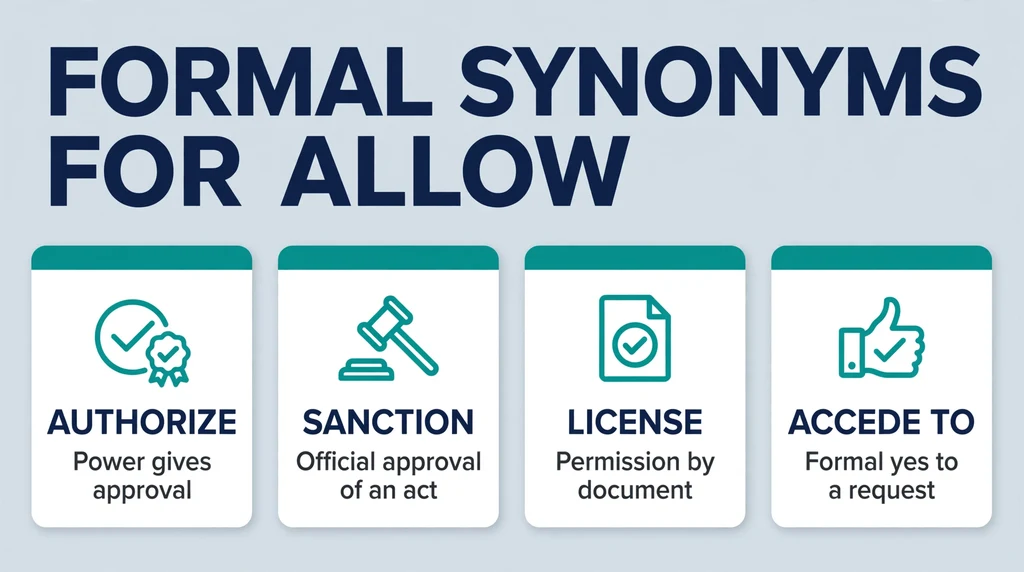
Formal settings reward precision. In law, policy, and official correspondence, the wrong verb can sound careless or even change who holds power. The words in this section come from the formal lists of major thesauri, and each one has a natural home.
Official and Legal Permission
Authorize is the heavyweight. It means a person or body with power gives approval, and Cambridge reserves it for exactly that authority context. Sanction also approves officially, though careful writers note its second life as a noun meaning a penalty. License grants permission through a document or a legal right, so a city licenses vendors rather than merely letting them trade. Warrant, as a verb, gives grounds or authority for an action. Accede to is a very formal yes to a request or demand, the kind a government gives. Commission hands a person an official task along with the power to do it. Together, these verbs signal that permission came through a channel, not a whim.
Formal Permission in Sentences
Formal verbs shine in clear examples. “Only the director can authorize refunds above five hundred dollars.” “The treaty sanctions joint patrols along the border.” “Vendors are licensed to sell food in the park.” “The board acceded to the auditors’ request for more time.” In each case, a plain let would drain the sentence of authority. Formal writing also prefers the passive frame “is not permitted” for bans, because it names the rule instead of a person. When you write policy, choose the verb that shows where the power sits.
One more pattern deserves attention: formal allow often travels with paperwork nouns. A request is granted, a permit is issued, and access is authorized. Writers who match the verb to the document sound instantly more professional. Compare “The office allowed his travel” with “The office authorized his travel and issued the permit.” The second version tells the reader exactly which step happened. In reports, that precision saves questions later, because nobody has to guess whether the yes was spoken, signed, or filed.
Synonyms for Allow That Mean Letting Something Happen
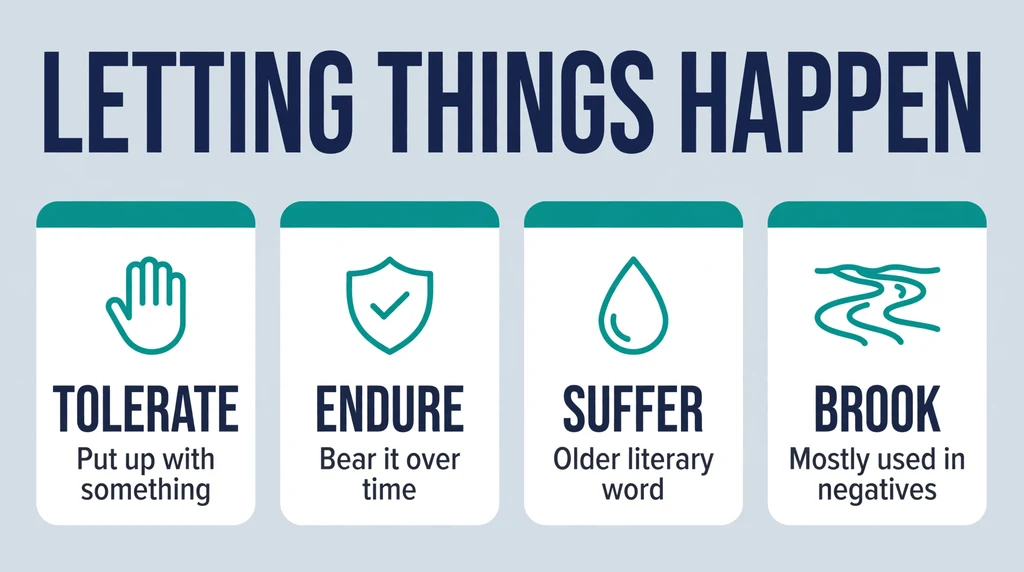
Sometimes allow does not grant anything. It reports that something happened while nobody stopped it. Merriam-Webster defines this sense as failing to prevent something, often through neglect or indifference. The tone turns critical here, so pick words that carry the right amount of blame.
Not Stopping Something
Tolerate is the standard choice. It means you put up with something you would rather stop: “The landlord tolerates loud music until midnight.” Endure and bear stretch the time frame, suggesting patience over a long period. Stand for refuses quietly; in its negative form it is a warning, as in “She will not stand for cheating.” The plain verb have works the same way in negatives: “I will not have gossip in this office.” Put up with is the informal member of the group, friendly in speech and essays with a light tone. Each of these words admits the thing happened, which is exactly why they fit this sense.
Older and Literary Choices
Older English offers richer colors. Suffer once meant allow, and it survives in literary lines such as “Suffer the little children to come unto me.” Modern readers may misread it as pain, so save it for deliberate, old-style effects. Brook means tolerate, but it lives almost entirely in negative phrases like “brook no argument.” It sounds stern and bookish. Countenance means to accept or approve of behavior, usually in formal criticism: “The school cannot countenance bullying.” These words reward careful handling. Used well, they lift formal prose; used casually, they confuse.
Letting People Have Their Way
A warmer corner of this sense covers indulgence. Indulge means you let someone enjoy something, perhaps against strict judgment: “She indulged the children with one more story.” Humor as a verb means you go along with a person’s mood or request to keep the peace. Cater to suggests serving someone’s wishes, sometimes too eagerly. Give in to marks the moment resistance ends. These verbs describe permission mixed with affection or surrender, a shade that plain allow only hints at.
Allow vs Tolerate: A Quick Contrast
Writers often grab tolerate when they want a classier allow, and the swap backfires. Allow in its passive sense is neutral: the thing happened, and nobody stepped in. Tolerate always adds an attitude. The tolerator dislikes the thing and puts up with it anyway. Compare “The rules allow short breaks” with “The manager tolerates short breaks.” The first sentence grants a right; the second reports patience that may run out. If your sentence would still work with “put up with,” tolerate is right. If it needs “give permission to,” stay with allow, permit, or let. This single test clears up most misuse in student essays and office reports alike.
Synonyms for Allow That Make Something Possible
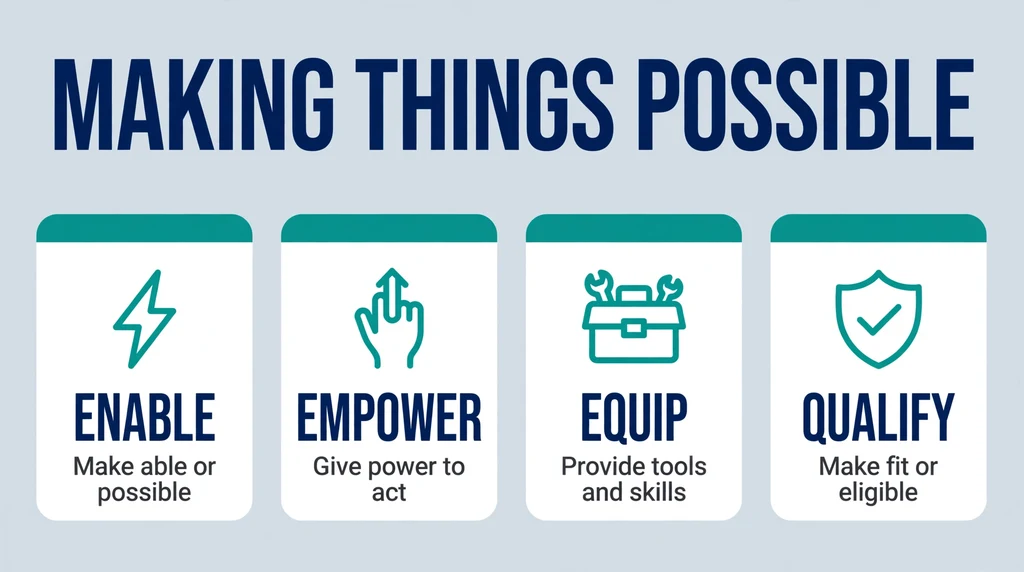
In this sense, the subject is usually a thing, a change, or a tool, and the result is a new ability. A key allows entry; a grant allows research; a design allows expansion. Because nobody grants permission here, words from the first sections would mislead. If your sentence is really about help or assistance rather than ability, the neighboring guide to synonyms for help covers that ground.
Making People Able
Enable is the leader of this group. It means to make someone able to do something, or to make an action possible at all. Empower goes further and adds confidence or authority, which is why trainers and lawmakers love it. Equip focuses on tools and skills: training equips staff to handle complaints. Qualify makes a person fit or eligible under a rule, as when a certificate qualifies you to teach. Prepare and ready sit at the edge of the group; they set someone up so the action can follow. Each verb names a different kind of help, so the choice sharpens your sentence.
Making an Outcome Possible
Things, not people, fill this half. “The software update enables files to open faster.” “A clause in the contract allows either side to cancel.” Here, permit can also work, since rules and designs permit outcomes in formal prose. Make possible is a plain phrase that always stays clear, though it lacks the punch of a single verb. Watch the grammar, too: this sense often takes a thing as subject and an infinitive after it. If your subject is a person giving a yes, go back to the permission groups instead.
Synonyms for Allow That Concede a Point
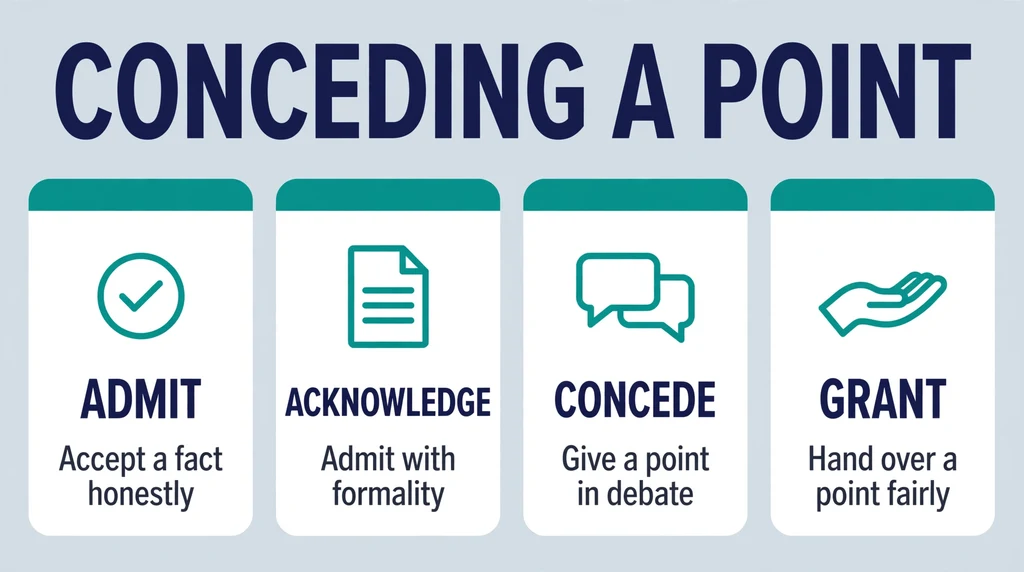
Debaters and essay writers use allow in a quieter way. To allow that something is true is to admit it, often a little reluctantly. Merriam-Webster marks this sense with the example “I’ll allow I probably said more than I should have.” Collins shows the same pattern in a news-style line: “He allows that the development may result in social inequality.” The words below own this territory.
Conceding in an Argument
Admit is the workhorse. It accepts a fact, sometimes against interest, and it sounds honest rather than weak. Acknowledge admits with care and formality; officials acknowledge mistakes, delays, and risks. Concede belongs to contests. A speaker concedes a point when the other side has earned it, and the word keeps a debate flavor. Recognize accepts something as true or valid, as in “We recognize that prices have risen.” Assent to adds a nod of agreement, mostly in formal records. Choose admit for plain honesty, concede for scored arguments, and acknowledge for public statements.
Grant and Granted: Conceding Gracefully
Grant has a special pattern in discussion. “I grant that the plan is expensive” means the speaker hands the point over and keeps arguing. The short form Granted opens many strong paragraphs: “Granted, the rent is high, but the location saves us an hour a day.” This move builds trust, because the reader sees fairness before the counterpunch. Grant also serves the permission sense, so context must make the job clear. In argument, pair it with a that-clause; in permission, pair it with a request or a right.
Conceding Without Losing
Skilled writers concede on purpose. A short admission early in an essay makes the main claim look earned rather than stubborn. The pattern is simple: concede the smaller point, then return with the stronger one. “Admittedly, the system is slow. Even so, it catches errors that faster systems miss.” Signal words such as admittedly, and verbs such as admit and grant, act as marks of fairness. Readers reward that fairness with trust. Just keep the concession honest and brief. Conceding a point you do not believe, or conceding the whole argument by accident, are the two failure modes to avoid.
Allow in the Sense of Setting Something Aside
The last sense is the planner’s allow. Collins lists a full budget family for it: give, provide, grant, spare, devote, assign, allocate, set aside, deduct, earmark, remit, and allot. The classic sentence is “Please allow 28 days for delivery.” Here the verb means build the time or money into your plan, and tourists, builders, and accountants use it daily.
Allot and allocate divide a total into shares, with allocate sounding more official. Set aside is the plain, friendly choice for saving time or money for a purpose. Earmark marks funds for one named use, and journalists use it for government money. Spare asks how much time or cash you can give without pain: “Can you spare an hour?” Devote commits time fully, with a serious tone. Deduct and remit belong to accounts and payments. If your topic is giving resources rather than permission, the guide to synonyms for provide goes deeper into that family.
Allow in Specific Contexts
Context bends word choice more than any dictionary entry. The three settings below show how the same verb changes its best replacement from one world to the next.
In School and Family Life
Home and school run on let and allow. Parents let children ride bikes to the park; schools allow retakes after illness. Let carries warmth and trust, so it suits family rules that feel protective rather than legal. Allow appears in handbooks, where distance is the point: “The school does not allow food in the library.” Verbs like indulge and give in to show up when rules bend for love, and children learn the difference early. A teacher who grants an extension sounds generous; one who accedes to demands sounds worn down. Small words carry the whole emotional report.
In Law and Government
Official texts prefer permit, authorize, license, and sanction, because each one names a legal channel. Laws permit assemblies, agencies authorize payments, and cities license businesses. The noun forms matter here as well: a permit, a license, and an authorization are documents a person can hold or lose. In this world, allow alone can look vague, since it does not say which instrument grants the right. Drafters also love the frame “It is prohibited to,” the mirror image of “It is permitted to.” When you read or write official prose, track which document does the allowing.
In Technology and Access
Software borrowed the language of permission wholesale. Systems allow or deny access, apps request permission, and settings enable or disable features. Enable is the default verb in this world, because a setting makes an action possible rather than granting a favor. Allowlist and denylist have even turned the verb into a noun compound for approved addresses and users. When you write about technology, follow the field: enable for features, allow for access decisions, and grant for one person handing rights to another, as in “Grant the app access to your photos.” Mixing these frames sounds off to technical readers.
How to Choose the Right Synonym for Allow
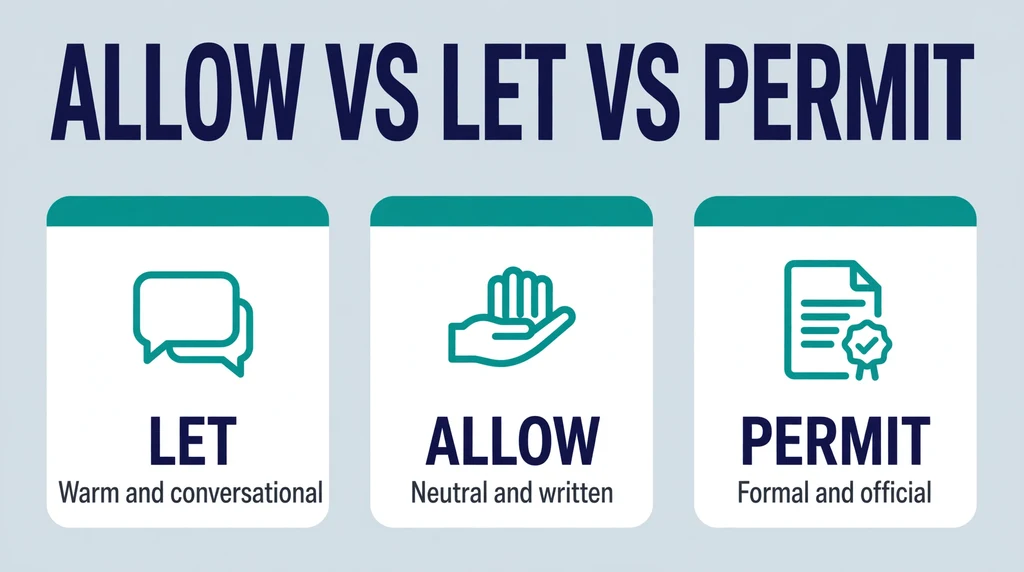
Three verbs cause most of the confusion: allow, let, and permit. They overlap in meaning, so the difference lies in tone, grammar, and how active the permission feels. A classic dictionary note puts it neatly: allow suggests passivity, permit implies positive consent, and let is the familiar, conversational choice. The comparisons below turn that note into decisions.
Allow vs Let
Let is warmer and shorter, and it dominates speech: “Let me see,” “Let her try.” Allow sounds more distant and written, as in rules, letters, and reports. Grammar separates them too. Let takes an object and a bare infinitive: “They let us leave early.” Allow takes an object and a to-infinitive: “They allowed us to leave early.” The famous error “let me to go” breaks that pattern. Choose let for natural dialogue and friendly prose. Choose allow when the sentence needs a measured, neutral tone, or when the subject is a rule rather than a person.
Allow vs Permit
Permit is the formal twin. Cambridge calls it the more formal word for allow, and the passive “is not permitted” is the voice of signs and policies. Permit also implies a positive, willing consent from an authority, while allow can sound like nobody bothered to object. Compare “The park allows dogs on a leash” with “The park permits dogs on a leash.” The first reports a practice; the second states an official rule. Permit also exists as a noun for a document, stressed on the first syllable, while the verb stresses the second. In casual writing, permit can feel stiff, so match it to formal ground.
Permit vs Authorize, Sanction and License
Once you enter formal territory, fine shades matter. Authorize names the person or office that holds the power. Sanction approves a specific act or policy at a high level. License grants a lasting right, often on paper, to a person or business. Permit states that an action may happen under a rule. A quick test helps: if the sentence answers “who said yes,” use authorize; if it answers “under what document,” use license; if it answers “under what rule,” use permit. Getting this right is what separates polished policy writing from rough drafts.
Formal vs Informal: Allow Words in Writing
Register decides whether your sentence earns trust. In an essay or a report, prefer permit, authorize, grant, and enable; they sound deliberate and precise. In stories and dialogue, prefer let, plus lively phrases like give the go-ahead, because characters speak like people. In business email, the middle ground works best: allow and approve keep a professional tone without legal weight.
Watch two traps. First, do not stack formal verbs for decoration; one precise verb beats three grand ones. Second, remember that sanction is a double agent: as a verb it approves, but as a noun it usually means a penalty, and readers may trip. When you mean backing or support rather than permission, that is a different family, covered in the guide to synonyms for support. A final style point: the pattern “is allowed to” is safe everywhere, from school rules to news reports, whenever you need a neutral passive.
Antonyms of Allow
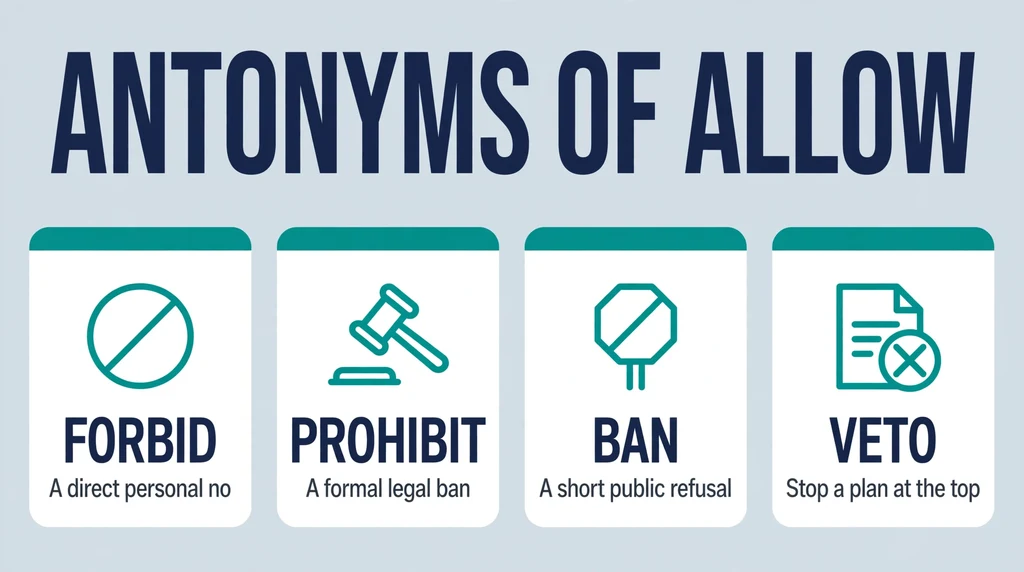
The opposite family is just as useful, especially for rules and warnings. Forbid is the direct, personal opposite: a person or rule says no. Prohibit is its formal partner, common in laws and official notices. Ban is short and public, the verb of headlines and campaigns. Disallow appears in sports, courts, and committees, where a goal, a claim, or a motion gets ruled out. Deny refuses a request or access. Bar blocks a person from a place or action, and veto kills a proposal at the top. Softer opposites include prevent, hinder, and obstruct, which stop things without a formal no. Proscribe is the most formal of all, a legal or official ban with historical weight.
Context shows the shades best. “The court disallowed the evidence” reports a ruling, dry and final. “The city banned parking on the bridge” announces a public rule. “Her parents forbade her to ride without a helmet” keeps the refusal personal and direct. “The committee vetoed the proposal” ends a plan at the highest level. Notice how each antonym, like each synonym, carries its own setting. A writer who swaps ban into a courtroom sentence, or disallow into a family rule, sounds slightly off even when the basic meaning survives. Setting, as always, is the tiebreaker.
Common Mistakes and Words That Are Not True Synonyms
The classic mistake is grammar, not vocabulary. Writers mix the frames and produce “let me to explain” or “allow me explain.” Keep the frames apart: let plus object plus bare infinitive; allow plus object plus to-infinitive. A second error swaps let and leave. “Leave me alone” asks for solitude; “let me alone” is older phrasing that most modern guides avoid.
A third mistake picks the wrong sense. Tolerate cannot grant permission, so “The museum tolerates visitors to take photos” should read “allows” or “permits.” Enable cannot give personal permission either; a parent enables a trip by paying, but allows it by saying yes. A fourth trap is facilitate. It means to make a process easier, and the major thesauri do not list it as a synonym of allow, so keep it for processes, not permissions. Finally, avoid the stiff phrase “allow for” when you mean permit; “allow for” belongs to planning, as in “Allow for delays,” where it means take something into account.
Frequently Asked Questions
What is the best synonym for allow?
For everyday permission, let is the closest and most natural synonym. For formal writing, permit is the standard choice, and authorize fits when a person or office holds the power. The best pick depends on the sense, because enable suits possibility and admit suits conceding a point.
What is a formal word for allow?
Permit is the classic formal word for allow. Authorize, sanction, license, and grant go further into official territory. Cambridge describes permit as the more formal option, while authorize belongs to people in authority who give approval.
What is the difference between allow and let?
Both verbs give permission. Let sounds conversational and appears constantly in speech, while allow feels more neutral and written. Their grammar differs as well: let takes a bare infinitive (let us go), and allow takes a to-infinitive (allow us to go).
What is the difference between allow and permit?
Permit is more formal and implies a positive consent from an authority or a rule. Allow can also mean simply not stopping something. That is why signs say “Smoking is not permitted,” while a relaxed report might say “The café allows laptops.”
What word can I use instead of allow in an essay?
Permit, authorize, grant, and enable cover most essay needs. For arguments, admit, acknowledge, and concede replace the conceding sense. These choices sound precise and academic without becoming obscure, so they suit school and university writing well.
Is enable a true synonym of allow?
Yes, in one specific sense. When allow means make something possible, enable matches it closely, and Merriam-Webster lists allow under the sense “to make able or possible.” Enable does not replace allow for personal permission, since a person allows a trip by agreeing, not by enabling it.
How do I use allow in the passive voice?
The common pattern is “be allowed to” plus a verb: “Visitors are allowed to take photos.” For formal bans, writers switch to permit in the passive: “Photography is not permitted.” These passive frames name the rule instead of a person, which makes them perfect for signs, policies, and handbooks.
What are the antonyms of allow?
The main antonyms are forbid, prohibit, ban, deny, disallow, and bar. Formal writing adds proscribe and veto. Softer opposites such as prevent, hinder, and obstruct describe stopping something without an outright refusal.
Final Thoughts
Allow looks simple, yet it quietly covers permission, tolerance, possibility, concession, and planning. The fix is to name the job first, then pick the verb built for it: let for warm everyday permission, permit and authorize for formal ground, enable when something becomes possible, admit and concede when you give a point, and allocate or set aside when time and money are on the table. If you want to check these groupings against a reference yourself, the Merriam-Webster Thesaurus entry for allow lists the same senses with examples. Choose by sense and tone, and your writing will sound precise instead of repetitive.