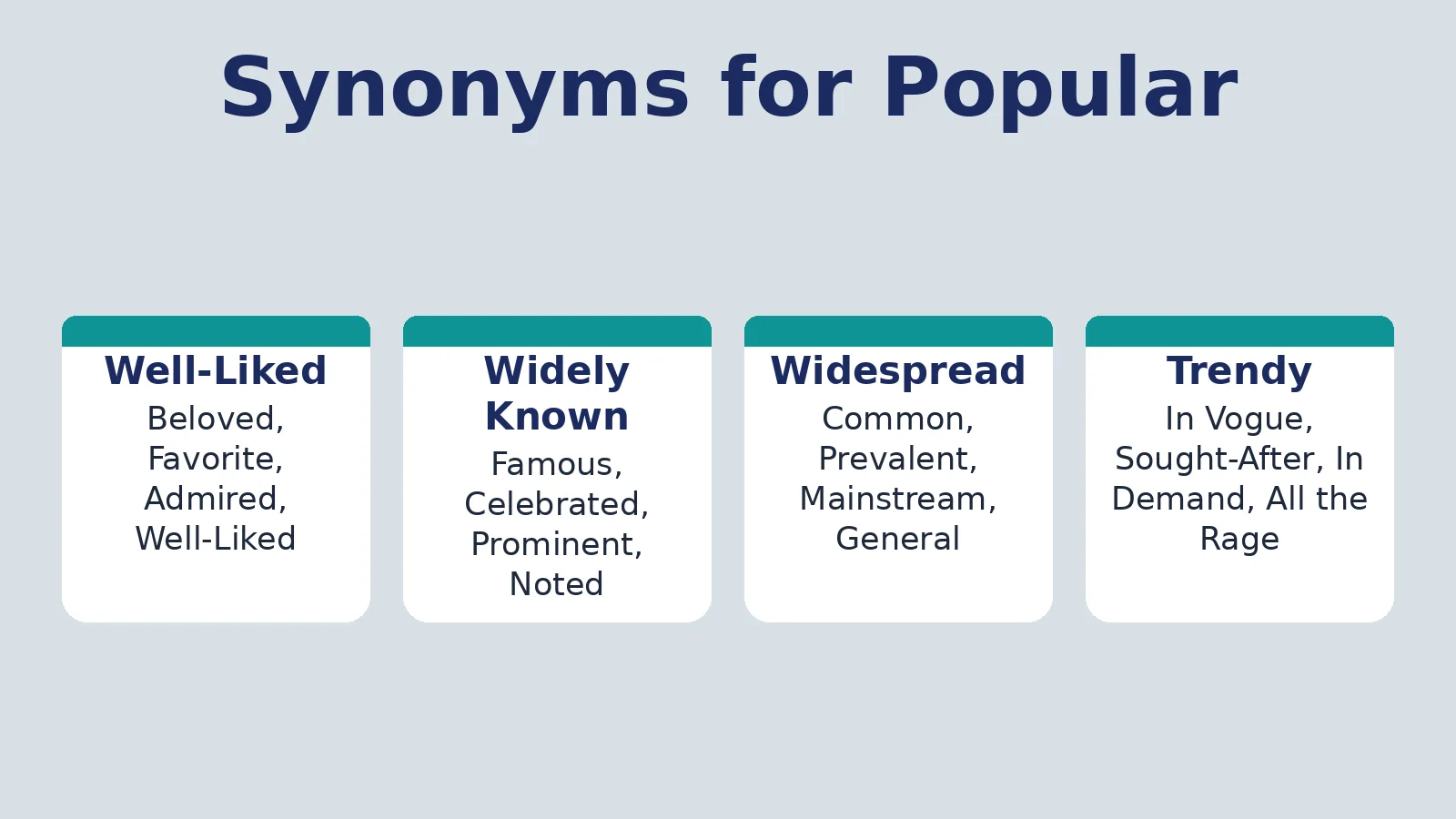
Few adjectives work as hard as popular. It praises the singer everyone streams, the teacher every student hopes for, and the belief half the country shares, yet it never says exactly which of those it means. The most useful synonyms for popular include well-liked, beloved, favorite, favored, admired, famous, celebrated, sought-after, in demand, trendy, widespread, common, and mainstream. Each one points at a different kind of success, though, which is why swapping them carelessly can change your meaning.
This guide sorts more than 100 synonyms for popular into clear groups, from deep affection to passing fashion. Every group explains the small differences between its words and shows them in real sentences. As a result, you can praise a person, a product, or an idea with the word that actually fits.
Top Synonyms for Popular: Quick Reference
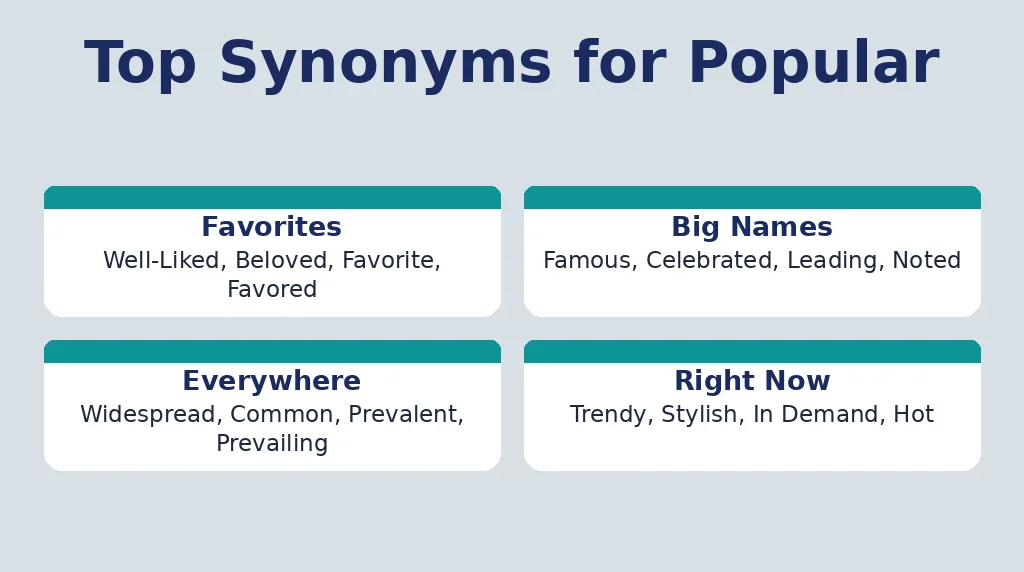
The table below covers the 28 synonyms readers reach for most often. Start here when you need one fast replacement. Later sections sort the full list into finer groups.
| Word | Meaning in one line | Best for |
|---|---|---|
| Well-liked | Liked by many people | The safest all-purpose choice |
| Beloved | Loved and cherished by many | People, places, treasured things |
| Favorite | Chosen above all others | Personal picks and winners |
| Favored | Preferred or given an advantage | Formal writing, contests |
| Admired | Respected and looked up to | People, work, character |
| Famous | Known by very many people | Recognition and fame |
| Celebrated | Widely praised and honored | Achievements, artists |
| Prominent | Important and easy to notice | Public figures, formal tone |
| Trendy | Fashionable right now | Style, products, social media |
| In demand | Wanted by many buyers or users | Products, skills, services |
| Sought-after | Actively chased by people | Jobs, homes, tickets |
| Widespread | Found or shared across a wide area | Beliefs, practices, support |
| Common | Shared by most people; everyday | Beliefs, habits, neutral tone |
| Prevalent | Existing commonly in a place or time | Formal writing, reports |
| Prevailing | Currently accepted by most people | Opinions, conditions |
| Mainstream | Accepted by the majority | Media, tastes, culture |
| Accessible | Easy for non-experts to enjoy | Books, science, design |
| Mass-market | Made for the general public | Publishing, products |
| Democratic | Decided or shared by the people | Politics, formal tone |
| Likable | Easy to like | People, characters |
| Lovable | Easy to love; endearing | People, pets, characters |
| Cherished | Held dear and valued | Memories, traditions |
| Esteemed | Highly respected | Formal writing, professionals |
| In vogue | In fashion at the moment | Fashion, design |
| All the rage | The current craze | Informal, lively writing |
| Hot | Extremely popular right now | Informal, slang |
| Leading | Ahead of all rivals | Brands, candidates |
| Noted | Well known and respected | Formal writing, achievements |
What Does Popular Mean?
At its core, popular means liked, enjoyed, or supported by a large number of people. A popular song is one that crowds actually play. A popular teacher is one that students genuinely enjoy. That first sense, being liked by many, is the one most readers want.
The word comes from the Latin *popularis*, which means “of the people,” from *populus*, “people.” That root explains why one adjective does so many jobs. Everything popular is connected to the general public in some way. Sometimes the public likes the thing. Sometimes it merely knows the thing, shares it, buys it, or votes for it.
Because the root is so broad, context has to finish the job. A popular belief is not loved; it is simply held by many people. A popular science book is not famous; it is written for non-experts. The groups below follow those different jobs one by one, so you can see which family your sentence belongs to before you pick a word.
Popularity also comes in degrees, and good writers grade it carefully. A singer can be liked by her town, well-liked across a region, or beloved by a whole generation, and each step claims more feeling from more people. Fame has its own ladder, from noted inside one field to famous in every household. Matching the word to the rung matters, because readers sense exaggeration quickly. Call a village baker beloved and the word charms; call a global brand beloved and it can sound like advertising.
Synonyms for Popular That Mean Well-Liked and Admired
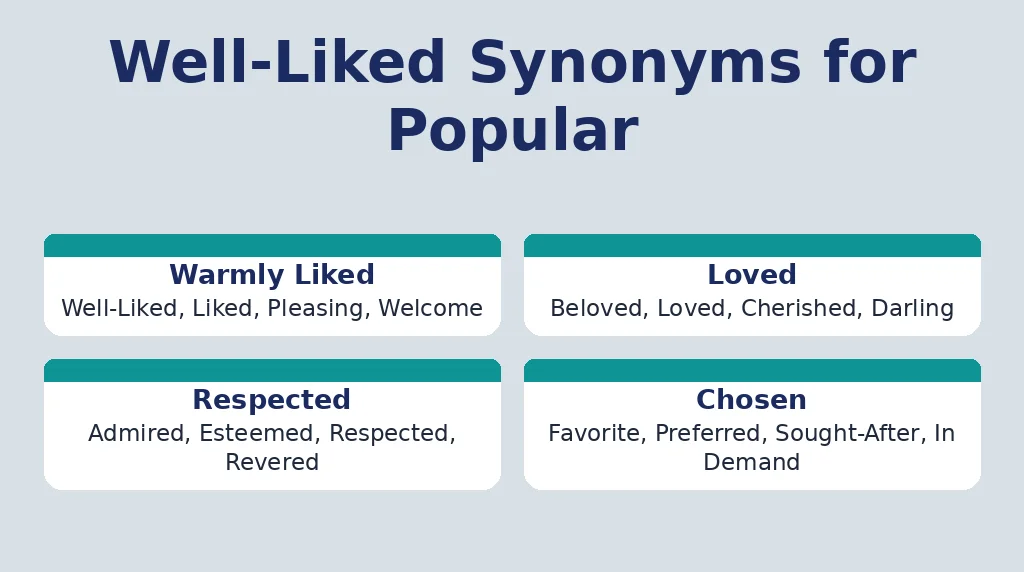
This is the home sense of popular, and it covers people, places, and things that win genuine approval. The words run on a scale. Some report mild, wide approval, while others describe deep affection.
Warm Approval: Liked by Many
These words say that plenty of people approve, without claiming love or fame. They are the safest replacements in everyday writing.
- Well-liked: liked by a large number of people; the closest match of all. Example: She is a well-liked manager who listens before she decides.
- Liked: enjoyed or approved of, plain and simple. Example: The new menu is liked by almost everyone who tries it.
- Favored: preferred above the alternatives. Example: He was the favored candidate long before the vote.
- Favorite: chosen above all others. Example: The park is a favorite spot for weekend picnics.
- Preferred: picked when a choice is offered. Example: Email remains the preferred channel for most customers.
- Pleasing: giving satisfaction or enjoyment. Example: The hotel has a pleasing view over the harbor.
- Likable: easy to like because of personality or manner. Example: The hero of the film is instantly likable.
- Welcome: gladly received by people. Example: The extra holiday was a welcome change for staff.
- Well-received: met with approval when it appeared. Example: Her first novel was well-received by reviewers.
- In favor: currently approved or supported. Example: The plan is in favor with the whole committee.
- Accepted: taken up willingly by most people. Example: The new rules were quickly accepted by the team.
- Approved: officially or generally agreed to be good. Example: It became the approved method within a year.
Admired and Respected
Approval deepens into respect in this group. These words suit people whose work or character earns the liking.
- Admired: respected and approved of at the same time. Example: She is an admired surgeon in three hospitals.
- Celebrated: widely praised and publicly honored. Example: The celebrated chef opened a small bakery.
- Praised: spoken of with approval. Example: The praised design won two awards.
- Esteemed: highly respected, formal in tone. Example: Our esteemed colleague retires this spring.
- Respected: treated with regard for skill or character. Example: He is a respected voice in local politics.
Loved Deeply: The Strong End
Sometimes liked is far too weak. These words describe real affection, so save them for people, places, and traditions that inspire it. For the softer, prettier end of this scale, compare the words gathered under synonyms for lovely.
- Beloved: loved deeply by many people. Example: The beloved library reopens next month.
- Loved: held in genuine affection. Example: It is the most loved song in the show.
- Cherished: valued and protected because it matters. Example: They keep up the cherished tradition every winter.
- Treasured: prized like something precious. Example: The letter became a treasured family possession.
- Prized: valued highly and hard to give up. Example: Quiet mornings are a prized luxury for her.
- Revered: honored with deep, almost solemn respect. Example: The revered founder still visits the school.
- Darling: dearly loved, often with warmth or playfulness. Example: The puppy became the darling of the office.
- Dear: loved and close to the heart. Example: The song is dear to everyone who grew up here.
- Pet: favored above others, as in a teacher’s pet project. Example: Recycling became her pet cause at work.
- Lovable: easy to love; endearing. Example: The robot in the film is clumsy and lovable.
Wanted: Popular Because People Chase It
Some things are called popular because demand proves it. The wanting itself is the popularity.
- Sought-after: actively looked for by many people. Example: The corner flats are the most sought-after in the building.
- In demand: wanted by many buyers, employers, or users. Example: Skilled translators are in demand this year.
- Desired: wished for by many. Example: It remains the most desired model in the range.
- Wanted: asked for and looked for. Example: The toy was the most wanted gift of the season.
Synonyms for Popular That Mean Famous and Widely Known
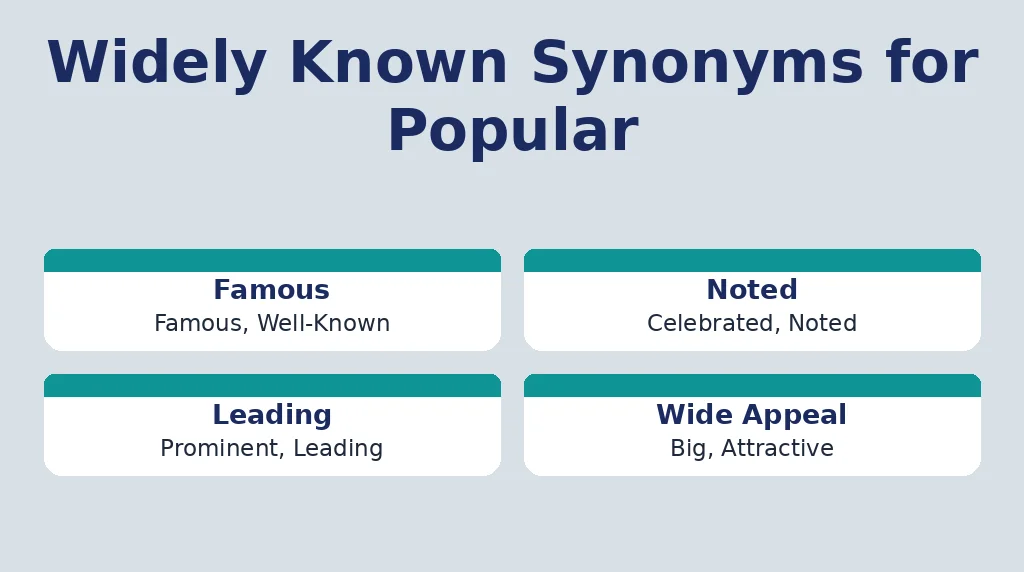
Popularity and fame overlap, but they are not the same thing, and this group lives on the fame side. These words measure how many people recognize a name, not how warmly they feel about it.
Known Everywhere
- Famous: known by very many people. Example: The famous bridge appears on every postcard.
- Well-known: familiar to most people. Example: It is a well-known brand in most countries.
- Prominent: important and easy to notice in a field. Example: She is a prominent lawyer in the city.
- Noted: well known and respected for something. Example: The noted historian gave the opening talk.
- Celebrated: famous because of praise and honors. Example: The celebrated pianist tours every spring.
Ahead of the Field
- Leading: in front of all rivals. Example: It is the leading brand in its category.
- Big: very popular or important, informal. Example: The series is big with teenage viewers.
- Attractive: drawing interest and approval through appeal. Example: The plan offers an attractive mix of price and quality.
A quick test helps here. If you could swap in “known” without changing the sentence, you want this group. If the sentence is really about affection, go back to the well-liked group above.
Synonyms for Popular That Mean Widespread and Common
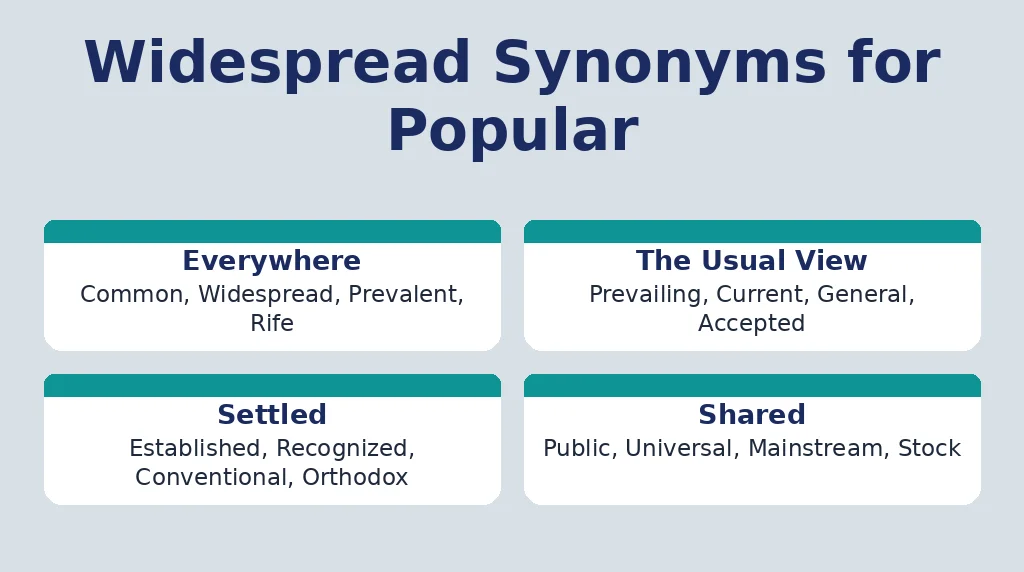
A popular belief is not a loved belief. It is a belief that most people hold. This large family describes ideas, habits, and conditions that are shared across a whole public.
Spread Across Places and Groups
- Widespread: existing over a wide area or among many people. Example: There is widespread support for the plan.
- Prevalent: common in a particular place or period. Example: This opinion is prevalent among younger voters.
- Rife: spreading widely, usually of something unwelcome. Example: Rumors were rife before the announcement.
- Common: shared by most; happening often. Example: It is a common mistake among beginners.
- General: involving most people or things. Example: The general feeling was one of relief.
- Universal: true for everyone, everywhere. Example: The song won almost universal praise.
The Accepted View
These words describe the opinion or practice that currently holds the field.
- Prevailing: accepted by most people at this time. Example: The prevailing view favors caution.
- Current: accepted or used now. Example: Current thinking puts rest before training.
- Accepted: agreed by most people to be true or right. Example: The accepted explanation blames the weather.
- Established: firmly in place and rarely questioned. Example: It is an established custom in the village.
- Acknowledged: recognized openly as true. Example: She is the acknowledged leader of the group.
- Recognized: generally accepted as valid. Example: It is a recognized method in the field.
- Mainstream: accepted by the majority; the normal run of things. Example: The style has entered mainstream fashion.
- Stock: standard and always used, sometimes a little lazy. Example: He gave the stock answer to the question.
Everyday and Ordinary
Some widespread words stress how unremarkable the thing is. Handle them with care in praise, because several can sound flat or even negative.
- Customary: done as a habit or custom. Example: It is customary to shake hands here.
- Usual: as happens most of the time. Example: Book the usual table for Friday.
- Ordinary: regular, with nothing special. Example: Ordinary people solved the problem first.
- Familiar: well known because it is seen often. Example: The tune is familiar to every listener.
- Plain: simple and unpretentious, close to the people. Example: The book explains science in plain language.
- Frequent: happening often. Example: Frequent buses serve the airport road.
- Everyday: ordinary and part of daily life. Example: Everyday speech drops most endings.
- Commonplace: found everywhere, and so unremarkable. Example: Phones are now commonplace in classrooms.
- Habitual: done as a settled habit. Example: His habitual route passes the market.
- Public: shared by or open to everyone. Example: Public opinion shifted within a month.
- Received: generally accepted, as in received wisdom. Example: The received view blames the rain.
- Shared: held or used in common. Example: They worked toward a shared goal.
- In circulation: currently passing among people. Example: The rumor is in circulation again.
- Conventional: following what most people accept or do. Example: She took the conventional route into law.
- Orthodox: holding the accepted beliefs of a group. Example: His orthodox approach surprised nobody.
- Conformist: following the majority without question. Example: The conformist design copied its rivals.
- Standard: normal and expected in its class. Example: The standard model suits most drivers.
One historical word deserves a warning. Vulgar once meant “of the common people,” and older thesauri list it for popular. Today it mainly means crude or offensive, so avoid it in modern writing.
Of the People: The Democratic Sense
In politics, popular keeps its oldest meaning: belonging to the people as a whole. The popular vote is the vote of ordinary citizens, not of officials.
- Democratic: decided by or for the people. Example: The change won a democratic mandate.
- Mass: involving large numbers of ordinary people. Example: It became a mass movement within weeks.
- Civic: relating to citizens and their duties. Example: The campaign appealed to civic pride.
- Civil: relating to ordinary citizens, not the military. Example: The award honors civil service.
- Communal: shared by a whole community. Example: The hall serves a communal purpose.
- Collective: done or owned by the group together. Example: It was a collective decision by the village.
- Social: relating to society as a whole. Example: The film sparked a social debate.
- Societal: relating to society, formal in tone. Example: The change had a wide societal impact.
- Representative: standing for the people as a whole. Example: The panel is representative of the region.
Trendy and In-Demand Synonyms for Popular
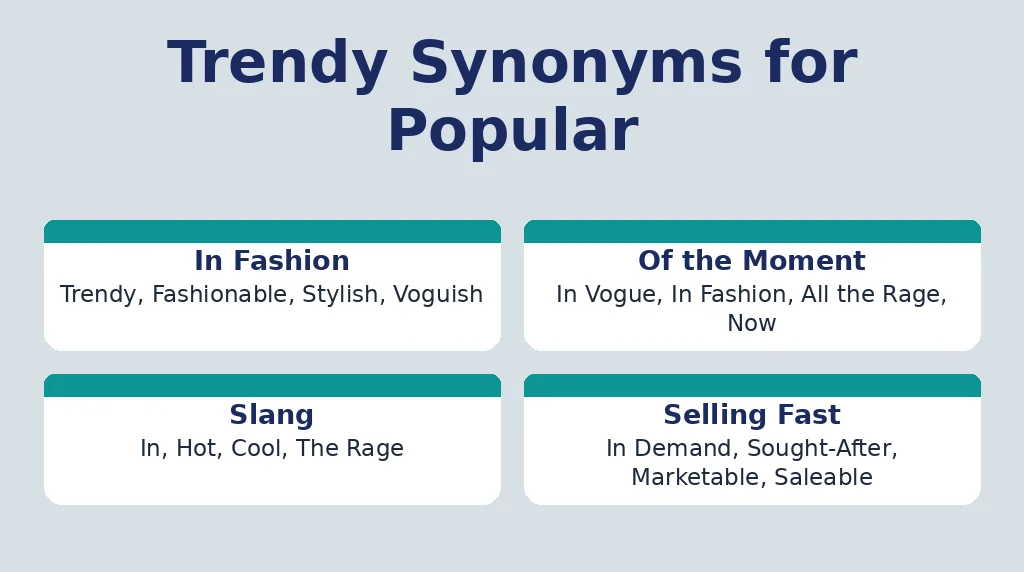
Fashion adds a clock to popularity. A trendy thing is popular right now, and everyone quietly knows the clock is ticking.
In Fashion
- Trendy: fashionable and popular at the moment. Example: The trendy cafe charges extra for oat milk.
- Fashionable: following the current fashion. Example: The coat is fashionable again this winter.
- Stylish: attractively fashionable. Example: She wore a stylish hat to the races.
- In vogue: in fashion at this time. Example: Short jackets are in vogue this year.
- In fashion: currently the done thing. Example: Loose fits came back in fashion.
- Voguish: fashionable, with a hint of showing off. Example: The voguish bar serves drinks in jars.
The Craze Words: Informal and Slang
These phrases burn bright and date fast, which makes them perfect for lively writing about the moment.
- All the rage: the current craze. Example: Ice baths are all the rage among runners.
- The rage: a sudden fashion everyone follows. Example: The dance became the rage overnight.
- In: fashionable, slang. Example: Bucket hats are in this summer.
- Hot: extremely popular right now, informal. Example: The hot new phone sold out by noon.
- Cool: popular because people admire it, informal. Example: It is the cool table at lunch.
- Now: fashionable at this moment, as in “very now.” Example: Her sound is very now.
- Faddish: following a short-lived craze, slightly critical. Example: The faddish diet faded by spring.
Trendy things are usually new things too, and the guide to synonyms for new covers that fresher vocabulary in depth.
Selling Because Everyone Wants It
Commercial popularity is measured at the till. These words describe products, skills, and tickets that people actively pursue.
- In demand: wanted by many buyers or employers. Example: Bilingual nurses are in demand nationwide.
- Selling: moving fast because buyers want it. Example: The selling point was the battery life.
- Commercial: successful with the paying public. Example: The album was a commercial triumph.
- Marketable: easy to sell because people want it. Example: Her skills are highly marketable.
- Saleable: able to be sold readily. Example: Bright covers make a book more saleable.
- Crowd-pleasing: designed to delight a wide audience. Example: The band closed with a crowd-pleasing anthem.
- Run-after: chased eagerly, informal. Example: The run-after tickets vanished in minutes.
Notice how fast these fashion words themselves age. Yesterday’s slang for trendy sounds dated within a decade, which is exactly the fate the words describe. Writers who need a sentence to last should borrow from the neutral shelf instead. Well-liked, in demand, and widely followed say the same thing without the ticking clock. Save hot and all the rage for pieces about this season, this year, or this feed.
Synonyms for Popular for the General Public
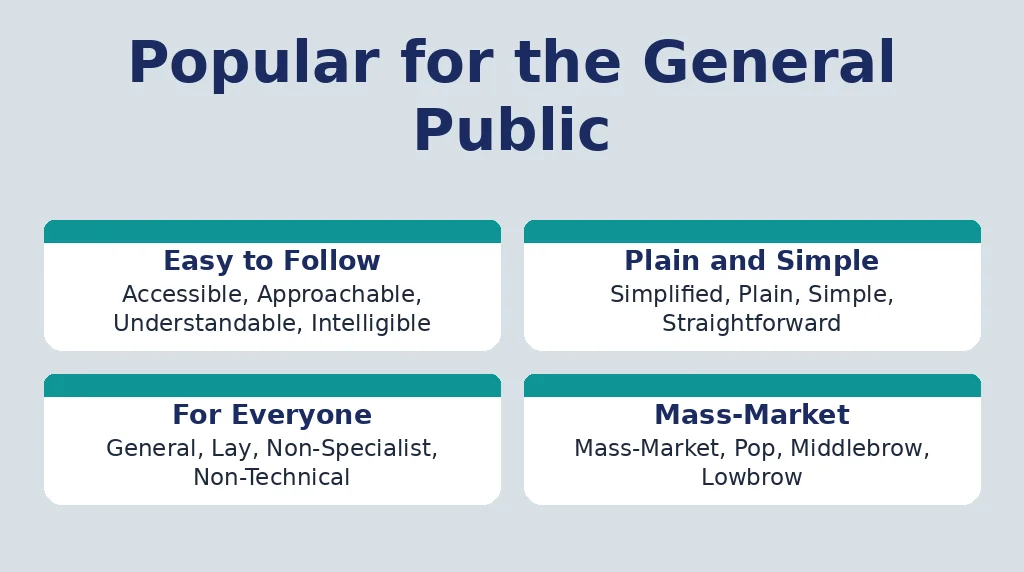
Popular science, popular history, and the popular press share a different meaning. Here popular describes material made for non-experts, and the praise is about clarity, not fame.
The word popular in front of a subject name is almost a promise. Popular mechanics, popular psychology, and popular history all promise the same bargain: the real subject, explained without the specialist training. That is why the synonyms here lean toward clarity and welcome. A book can be accurate and still fail as popular science if readers need a dictionary beside it.
Easy to Follow
- Accessible: easy to understand or use. Example: The museum makes science accessible to children.
- Approachable: friendly and easy to engage with. Example: His approachable style suits new readers.
- Understandable: able to be understood without strain. Example: The guide is understandable at a first reading.
- Intelligible: clear enough to be understood, formal. Example: The report is intelligible to lay readers.
- Straightforward: simple and direct, with no hidden steps. Example: She gives a straightforward account of the war.
- Easy: not difficult to follow. Example: The book is an easy read on a train.
- Simple: plain in structure and wording. Example: He explains gravity in simple terms.
- Simplified: made easier by removing detail. Example: The simplified map hangs in every classroom.
Made for Everyone
- General: for most people, not specialists. Example: The magazine targets the general reader.
- Lay: for non-experts, as in the lay reader. Example: The summary is written in lay terms.
- Non-specialist: aimed at readers outside the field. Example: It is a non-specialist introduction to astronomy.
- Non-technical: free of specialist terms, or using few. Example: The manual stays non-technical throughout.
- Plain: simple and direct, as in plain English. Example: The contract is written in plain language.
- Mass-market: produced for the general public in large numbers. Example: The mass-market edition costs half as much.
- Pop: popular culture in short form, as in pop music. Example: The gallery shows pop art from the sixties.
Middle of the Road: Use with Care
Two register words sit at the edge of this group. Middlebrow describes culture aimed at the middle of the market, and it can sound like a sneer. Lowbrow is ruder still, implying cheap taste. Both appear in thesaurus lists for popular, yet neither works as a compliment. If you mean praise, choose accessible or approachable instead.
Formal and Informal Synonyms for Popular
Register is where most synonym swaps go wrong. The same claim sounds dignified in one word and slangy in another, so match the word to the room.
Formal Choices
Reports, essays, and ceremonies favor the steady words: esteemed, revered, celebrated, noted, prominent, prevalent, prevailing, conventional, and orthodox. A university report calls a scholar esteemed, not hot. A news analysis calls an opinion prevailing, not trendy. These words also age well, because they do not depend on this year’s fashion.
Neutral Everyday Choices
Well-liked, famous, widespread, common, and in demand work almost anywhere. They carry no strong praise and no slang. When in doubt, they are the words to reach for, since readers of every level understand them at once.
Informal and Slang Choices
Trendy, hot, in, cool, big, pop, and all the rage belong to conversation, entertainment writing, and social media. They add energy, yet they date quickly. A textbook that calls a singer “hot” will sound old within a few years, while “popular” itself never dates at all.
How to Choose the Right Synonym for Popular
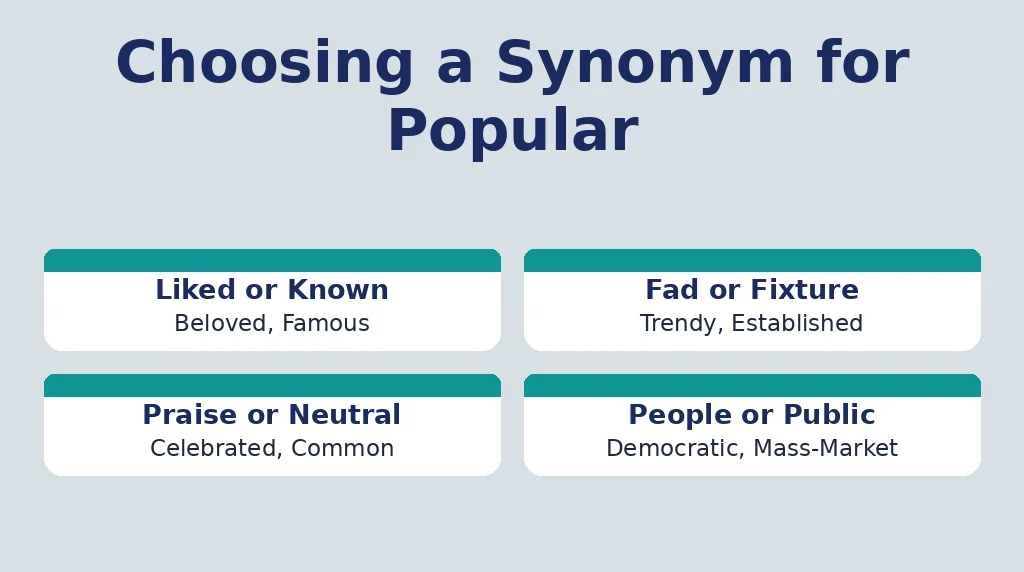
Four confusions cause most mistakes with this word family. Work through them once, and the right choice becomes quick.
Popular vs Famous: Liked or Just Known?
This is the big one. Famous means known by many people. Popular means liked by many people. The two often travel together, but either can exist alone. A famous traffic jam is known to every driver in the city, and liked by none of them. A popular village baker may be unknown outside her street.
Read your sentence and ask which claim you are making. If you mean affection, use well-liked, beloved, or admired. If you mean recognition, use famous, well-known, or celebrated. Writers who need the fame side in depth will find the full breakdown under synonyms for famous, which sorts renown by its kind.
Popular vs Trendy: Built to Last or Built for Now?
Trendy promises popularity with an expiry date. A popular breakfast cereal may sell for fifty years. A trendy cereal flavor may last one summer. Choose trendy when the newness is part of the story. Choose popular, established, or classic staying power when the thing has already lasted.
Popular vs Common: Praise or Put-Down?
Common is a true synonym in the widespread sense, yet it carries a shadow. Calling a song common says everyone knows it. Calling a person common can sound like an insult about class or manners. In praise, prefer well-liked or widespread. Keep common for beliefs, habits, and mistakes, where it stays neutral.
Popular vs Beloved: How Strong Is the Feeling?
Popularity is wide; love is deep. A school may have a popular head teacher who is merely approved of, and a beloved one who is greeted with hugs. Use beloved, cherished, and treasured only when the affection is real. Readers feel the exaggeration at once when a merely liked thing is called beloved.
Popular vs In Demand: Liked or Just Wanted?
Some popular things are chased rather than loved. A sought-after apartment, an in-demand skill, and a fast-selling product line all prove their standing through demand. Affection may follow, but it is not required. Nobody loves the last train home, yet it is very much in demand on a rainy night. So when your evidence is queues, prices, or waiting lists, choose a demand word. When your evidence is praise, loyalty, and return visits, choose a liking word instead.
Antonyms for Popular
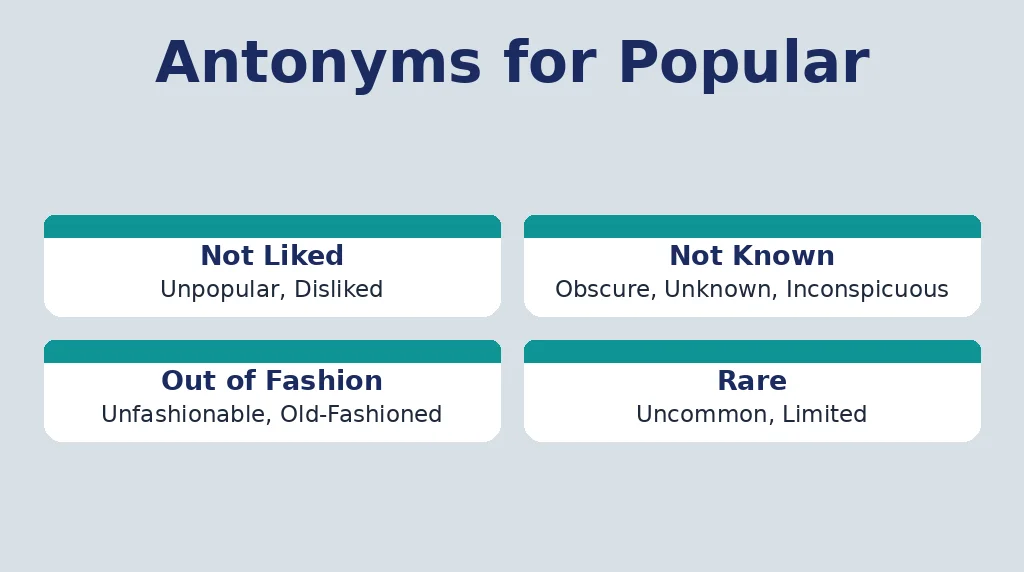
Each sense of popular has its own opposite, so pick the antonym that matches the claim you are denying.
The strongest opposite is unpopular, and it is also the bluntest. In careful writing, a narrower opposite often serves better. A little-known band is obscure rather than unpopular, because nobody has rejected it yet. A policy nobody has heard of is unknown, not disliked. Choosing the precise opposite keeps criticism fair and accurate.
Not Liked
- Unpopular: not liked or supported by many people; the direct opposite. Example: The new tax proved deeply unpopular.
- Disliked: actively not liked. Example: The sequel was disliked by most fans.
Not Known
- Obscure: little known, hidden from notice. Example: The band stayed obscure for a decade.
- Unknown: not recognized or famous at all. Example: The painter died unknown.
- Inconspicuous: not easy to notice. Example: The cafe keeps an inconspicuous storefront.
Out of Fashion or Rare
- Unfashionable: no longer in fashion. Example: The cut became unfashionable within a year.
- Old-fashioned: out of date in style or thinking. Example: He kept his old-fashioned manners.
- Uncommon: not often found or shared. Example: The view is uncommon in modern cities.
- Limited: available or known only to a few. Example: The record had a limited release.
Words That Are Not True Synonyms for Popular
Thesaurus lists are generous, and a few regular entries mislead writers who swap words blindly. These are the traps worth knowing.
Notorious
Notorious appears in thesaurus lists for popular, because notorious things are widely known. The catch is the reason: notorious means famous for something bad. A notorious cheat is popular only with headline writers. Use it when the fame is negative, and never as praise.
Viral
Viral describes speed of spread, not depth of approval. A viral video may be adored, mocked, or hated, and many viral stars are forgotten within a month. If people merely shared the thing quickly, say viral. If they love it and keep loving it, say popular.
Cult
A cult favorite has a small, fierce, devoted following. That loyalty is intense, yet the audience is tiny by definition. Cult is therefore close to an opposite of popular in reach, whatever the depth of feeling.
Bestseller and Celebrity
A bestseller is a sales result, and a celebrity is a famous person. Both nouns grow out of popularity, but neither can replace the adjective in a sentence. You cannot call a teacher “a bestseller teacher.” Keep the nouns for results and people, and the adjectives for descriptions.
Frequently Asked Questions
What is the best synonym for popular?
Well-liked is the closest all-purpose match, because it keeps the core meaning of being liked by many people. For stronger praise, choose beloved or admired. For fame without affection, choose famous or well-known instead.
What is a formal word for popular?
Esteemed and revered are formal choices for people, while prevalent and prevailing suit formal writing about beliefs and conditions. Celebrated and noted also work well in reports, speeches, and academic prose.
Is famous a synonym for popular?
Partly. Famous means known by many people, while popular means liked by many people. A famous landmark earns both labels easily, but a famous problem is only known. Choose based on whether your sentence claims recognition or affection.
What is the difference between popular and trendy?
Popular can last for decades, while trendy is popular only for the moment. A trendy item is new and fashionable right now, with no promise about next year. Use trendy when the short life is part of your point.
What is a slang word for popular?
Hot, in, and cool are common slang choices, and all the rage is a lively informal phrase. Big also works in informal writing, as in “the show is big right now.” All of them date quickly, so save them for relaxed contexts.
What is the opposite of popular?
Unpopular is the direct opposite for the liked sense. For the fame sense, use obscure or unknown. For fashion, unfashionable or old-fashioned fits best. Match the antonym to the sense you are denying.
Can popular mean common instead of liked?
Yes. In phrases like “the popular belief” or “a popular misconception,” popular means widely held by the general public. Widespread, prevalent, or common can replace it there without changing the meaning.
What is a stronger word than popular?
Beloved is stronger for affection, and celebrated is stronger where fame comes with praise. For demand, sought-after outranks plain popular. Each stronger word also narrows the meaning, so it says more within the same sentence.
Final Thoughts
Popular looks simple, yet it quietly covers liking, knowing, sharing, buying, and voting. The word you choose tells readers which of those stories you mean. Well-liked and beloved speak of affection, famous and celebrated speak of recognition, and widespread and mainstream speak of a whole public. Trendy adds the clock, while accessible praises clarity for the general reader.
When you hesitate, return to the question behind the sentence: do people love it, know it, hold it, or chase it? The answer picks the word for you. For the full reference lists behind this guide, the Merriam-Webster Thesaurus entry for popular is the natural next stop.