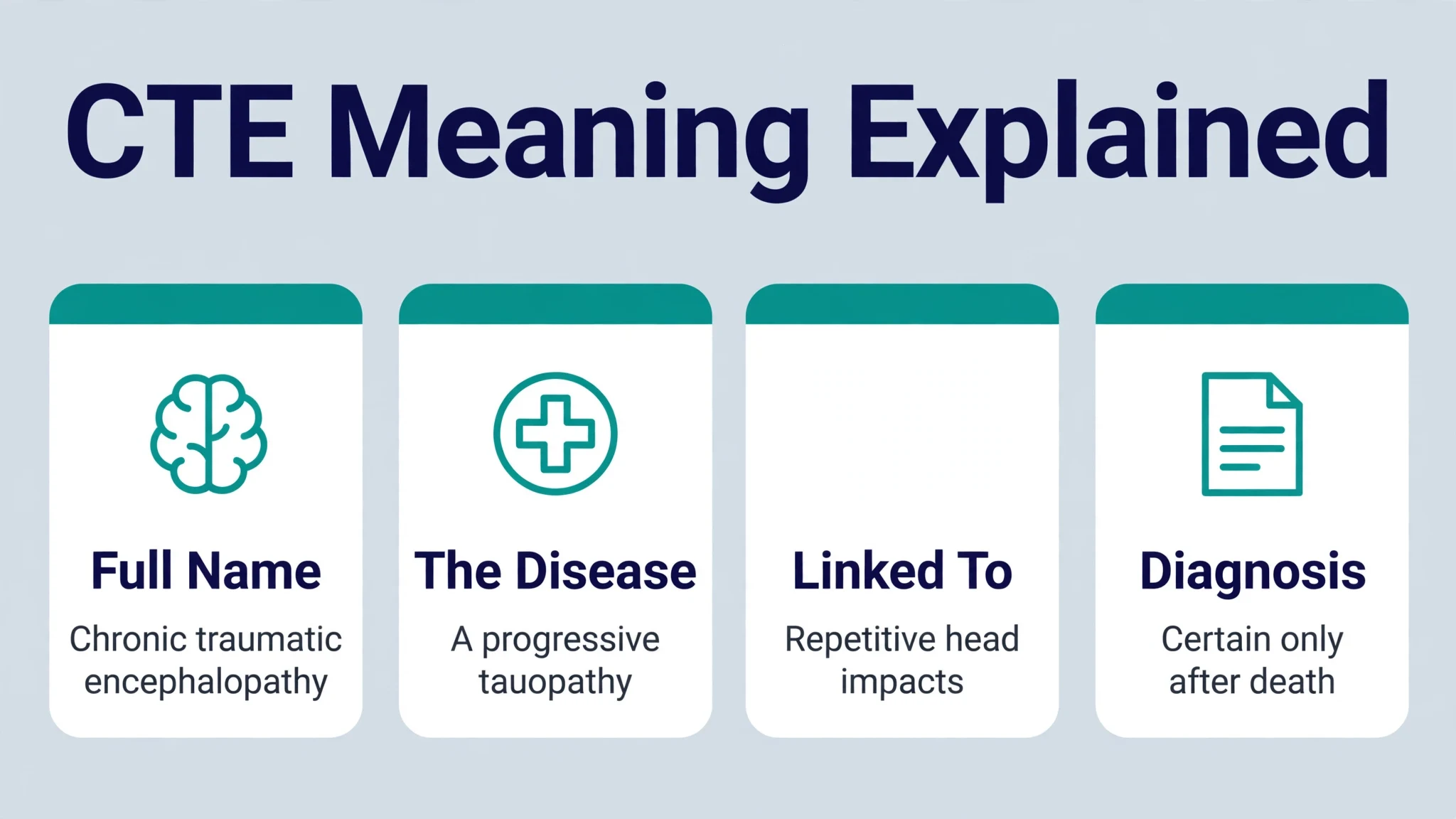
CTE stands for chronic traumatic encephalopathy. It is a progressive brain disease, a tauopathy, found in people with a history of repetitive head impacts, including contact sport athletes and military personnel. In CTE, an abnormal form of a protein called tau builds up in a distinctive pattern in the brain, and the damage worsens over time. The United States National Institute of Neurological Disorders and Stroke (NINDS) describes CTE as a neurodegenerative disease associated with repetitive head trauma.
One fact shapes everything written about CTE, including this guide. At present it can be diagnosed with certainty only after death, by examining brain tissue.
This guide explains, from the medical literature and the consensus statements of the research bodies involved, what CTE is, what happens in the brain, the century of history from “punch drunk” boxers to the modern studies, the symptoms and stages researchers describe, who is at risk. And what is and is not known. It is an explainer, not medical advice; the closing section says more about that.
What Is CTE?
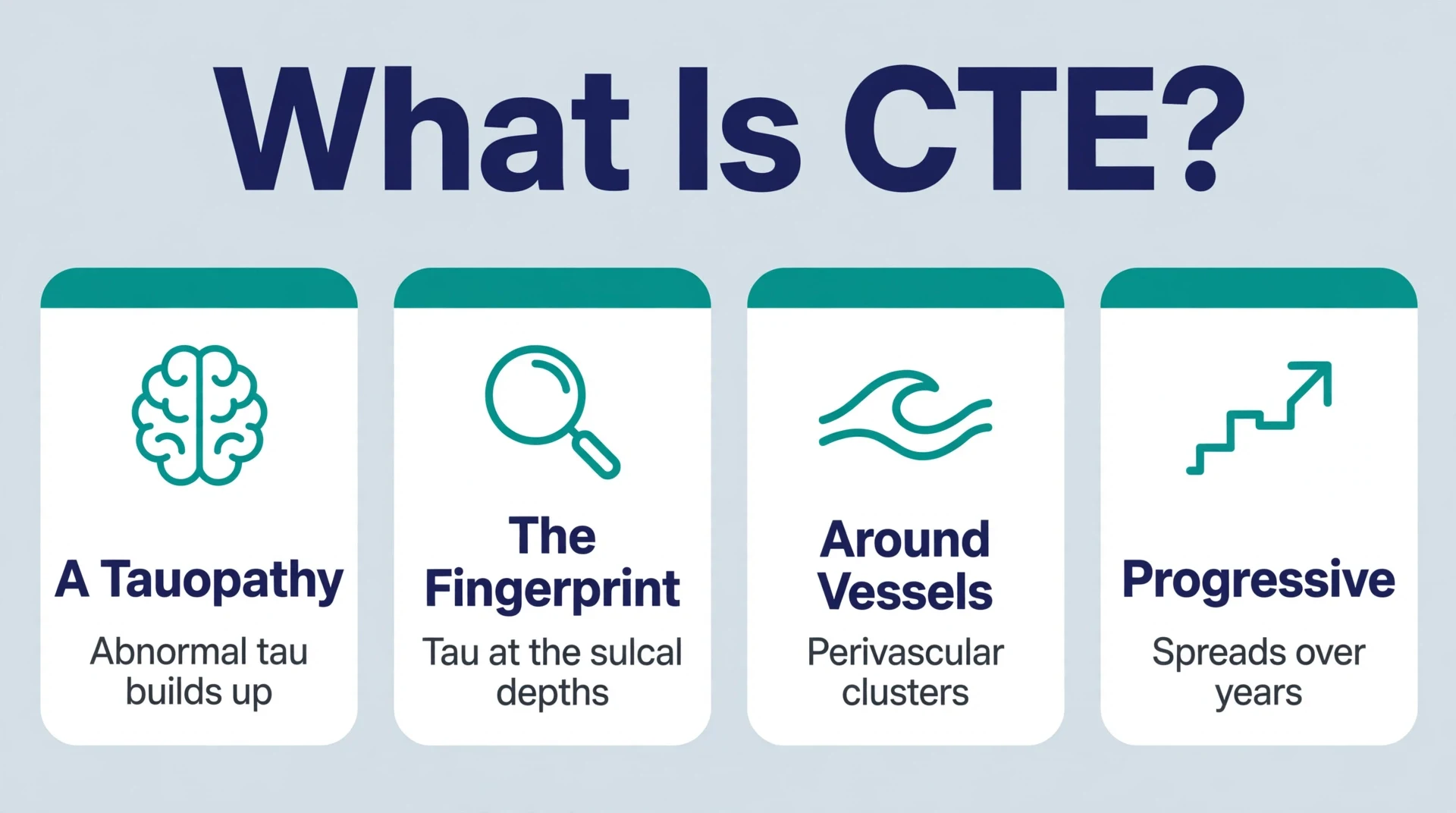
CTE is classified as a tauopathy, a family of neurodegenerative diseases defined by abnormal accumulations of tau. Tau is a normal protein that stabilises the internal structure of brain cells. In CTE, tau becomes abnormally phosphorylated (researchers write it as p-tau), detaches. And clumps into tangles inside neurons and support cells, disrupting and eventually killing them. Alzheimer’s disease is also a tauopathy, but the pattern of damage in CTE is different. And that difference is the disease’s fingerprint.
The fingerprint was formalised in 2016, when an expert panel convened by NINDS and the National Institute of Biomedical Imaging and Bioengineering defined the pathognomonic lesion of CTE, the one finding required for the diagnosis. An irregular accumulation of p-tau in neurons and astroglia, clustered around small blood vessels, deep in the grooves of the brain’s surface, the cortical sulci. A 2021 refinement organises confirmed cases into Low CTE and High CTE according to how widely the pathology has spread.
The definition carries two implications readers should hold onto. First, CTE is a pathological diagnosis, a statement about tissue, not a clinical one about a living patient’s symptoms. Doctors may suspect it in life (the research framework for that suspicion is called traumatic encephalopathy syndrome, TES), but certainty requires the brain itself. Second, the association in the definition is with repetitive head impacts as a category: not a single concussion. And not only diagnosed concussions, since the smaller subconcussive blows that never produce symptoms are part of the exposure researchers count.
In October 2022, the National Institutes of Health formally updated its position to state that CTE is caused in part by repeated traumatic brain injuries, the clearest causation statement the field’s largest institution has issued. And a marker of how far the evidence had consolidated by then.
What Happens in the Brain
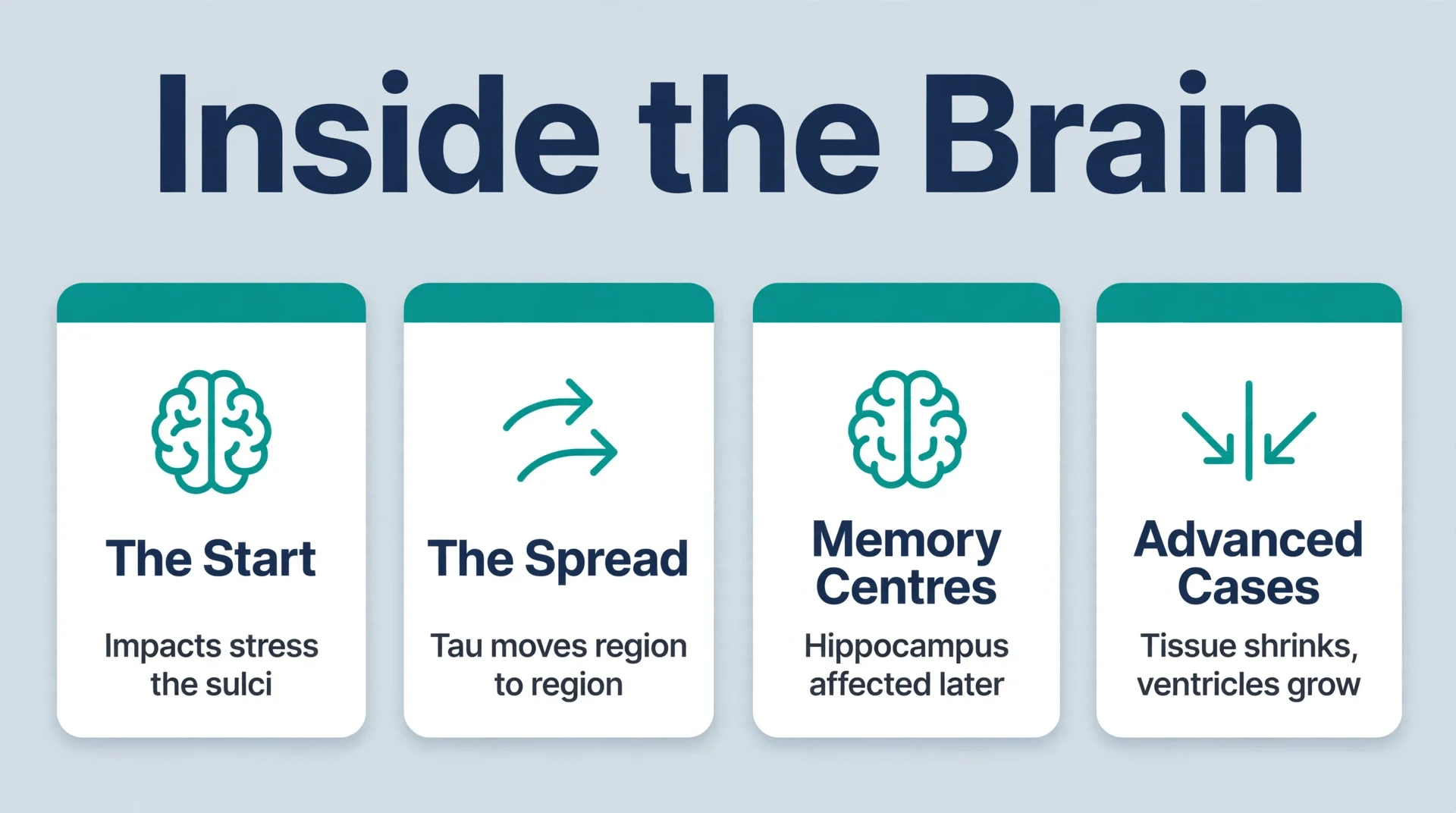
The mechanics, as the consensus literature describes them, run in a sequence. Repetitive impacts subject the brain to mechanical forces, concentrated, researchers believe, at the depths of the sulci, where the folds of the cortex create stress points and where the earliest tau deposits are found, wrapped around blood vessels. From those starting points, in cases that progress, the abnormal tau spreads to neighbouring regions and then widely through the cortex, the medial temporal lobe (including the hippocampus, central to memory) and deeper structures. Brain tissue shrinks in advanced cases, and the ventricles enlarge.
The process resembles a slow fire rather than an injury. The initiating impacts may be decades in the past by the time pathology is advanced. And former athletes in the research cohorts often describe symptoms beginning years after they stopped playing. This latency is one reason the disease evaded description for so long. And one reason establishing who has it. And how much exposure causes it, remains genuinely difficult science rather than settled bookkeeping.
Two honest uncertainties belong in any accurate account. Researchers do not yet know the dose. How much impact exposure, of what kind, over how long, produces CTE in a given person. And why some heavily exposed people show no pathology at autopsy while others show a great deal. And the relationship between the pathology and symptoms, while real in the aggregate, is not a simple dial. Severity of tau burden correlates with the clinical picture imperfectly. This is why responsible researchers, including those quoted later in this guide, resist reading a life backwards from a brain slide.
The History: From Punch Drunk to the Brain Banks
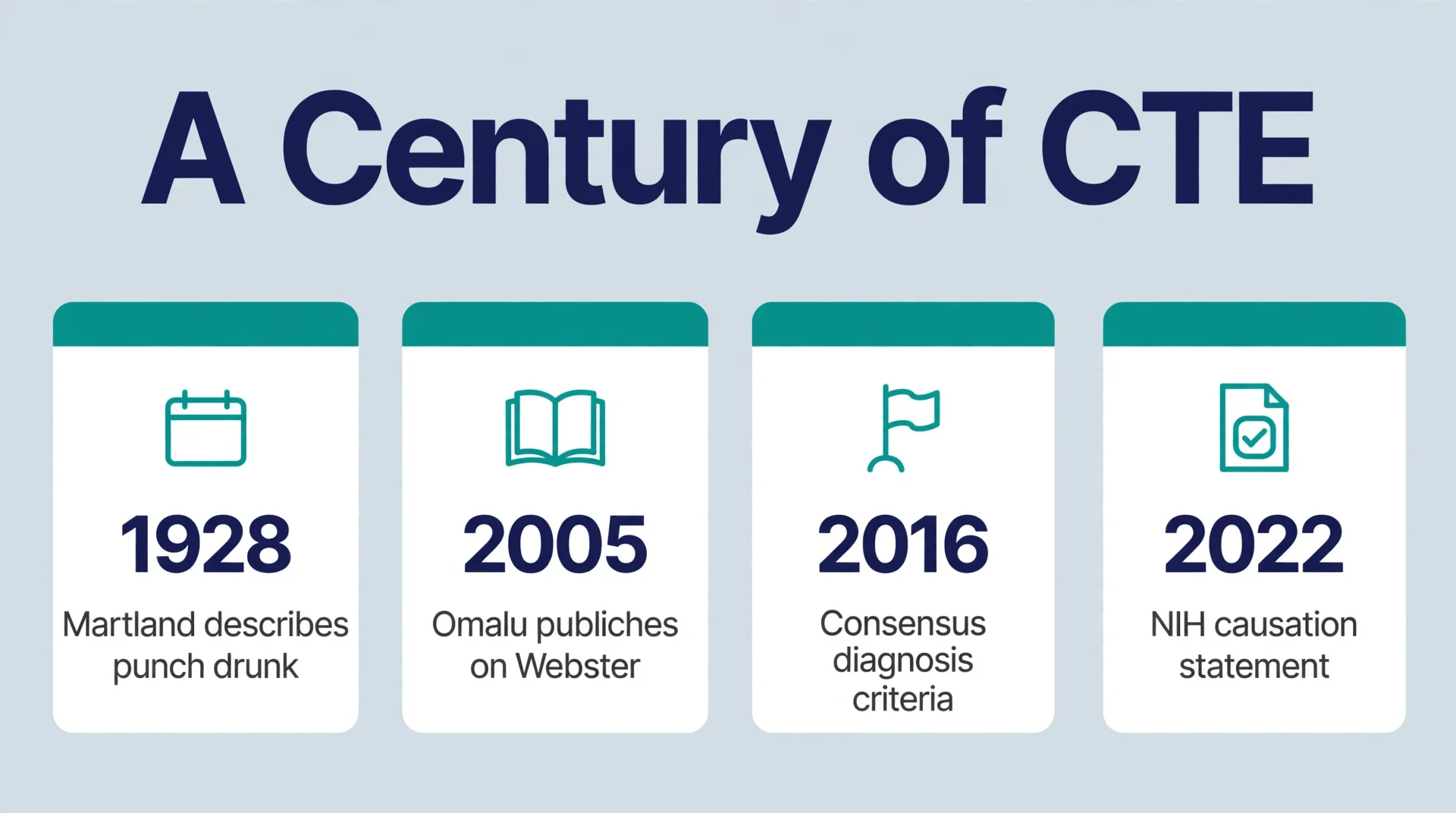
1928. The story opens in boxing. Dr Harrison Martland, a New Jersey pathologist, publishes in the Journal of the American Medical Association his description of “punch drunk” syndrome. Veteran boxers with slurred speech, unsteady gait, confusion and Parkinson-like features. This he attributes to the accumulated blows of their careers. The medical name that follows is dementia pugilistica, the boxer’s dementia. For most of the twentieth century medicine filed the condition as a boxing problem and studied it in small series, while British researchers described its pathology in detail in the 1960s and 1970s. And otherwise left at the edge of medicine.
2002 to 2005. The modern era begins with a single autopsy. Mike Webster, the Pittsburgh Steelers’ Hall of Fame centre, dies in 2002 after years of well documented decline. And forensic pathologist Dr Bennet Omalu examines his brain, finding tau pathology of a kind he judges distinct. Omalu’s paper appears in the journal Neurosurgery in 2005, naming the condition in an American football player and applying the older term, chronic traumatic encephalopathy. NFL affiliated researchers contested the finding sharply at the time, a dispute now part of the public record. Further cases in other deceased players followed.
2008 to 2017. The science scales up. Boston University establishes its CTE Center and, with partners, the UNITE Brain Bank, collecting donated brains from former athletes and military personnel and standardising the examinations. Ann McKee, the centre’s director, leads the staging work described below. The field formalises: the NINDS/NIBIB consensus criteria for the diagnosis arrive in 2016, the NIH causation statement in 2022. And in between, in July 2017, the study that made CTE a household word.
The Study Everyone Cites, and Its Caveat
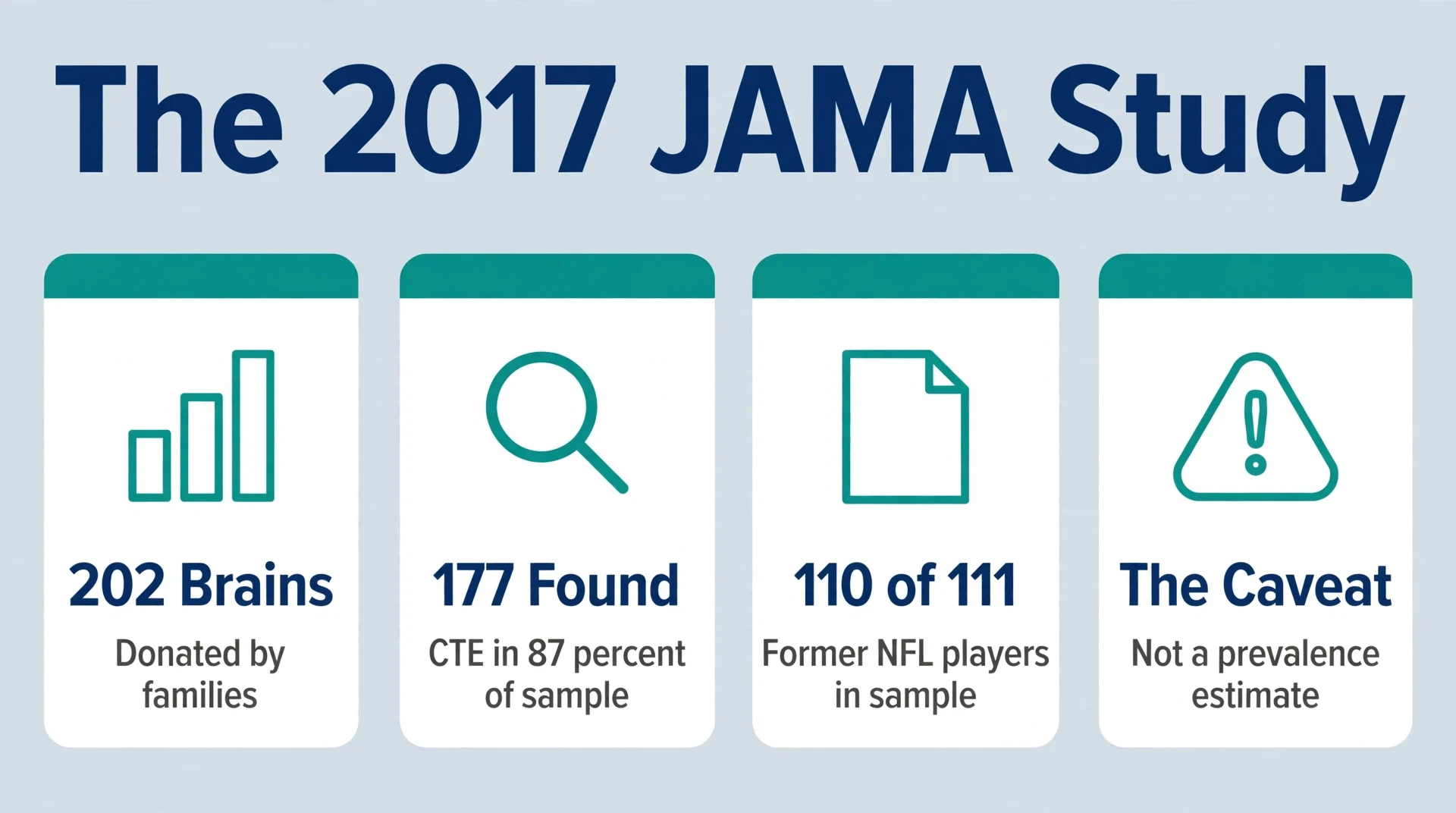
In 2017, Jesse Mez and colleagues at Boston University published in JAMA the largest CTE case series to that date. 202 brains of deceased American football players donated to the brain bank. CTE pathology was found in 177 of them (87 percent), including 110 of 111 former NFL players (99 percent), 48 of 53 former college players. And 3 of 14 former high school players, with severity rising broadly with level of play.
Those numbers are quoted everywhere, and they are real. But the authors themselves attached a warning that must travel with them. And this guide follows the authors: the brains were donated, largely by families who had noticed symptoms. So the sample is self selected and cannot be used to estimate how common CTE is among all football players. The authors state this in the paper in so many words: prevalence cannot be concluded or implied from this sample. What the study did establish, robustly, is the existence and character of the pathology across levels of the sport, the dose-like gradient with years of play, and the clinical stories families reported. What it cannot tell anyone is an individual player’s risk. And any headline converting 110 of 111 into a personal probability is misusing it.
The 2023 Study of Young Athletes
A later study extended the picture downward in age. A 2023 JAMA Neurology paper examined 152 donated brains of athletes who died before age 30 and found CTE pathology in 63 of them (41.4 percent), most of them football players, again in a donated, symptom influenced sample. And again evidence of the pathology’s reality and reach rather than of its frequency in young athletes generally.
The two studies together mark the state of knowledge honestly. The disease is real, its lesion is defined, its association with repetitive impacts is accepted by the field’s institutions, causation has been formally acknowledged by the NIH. And the numbers every reader actually wants, how likely, at what dose, for whom, remain under active research.
Symptoms and the Four Stages
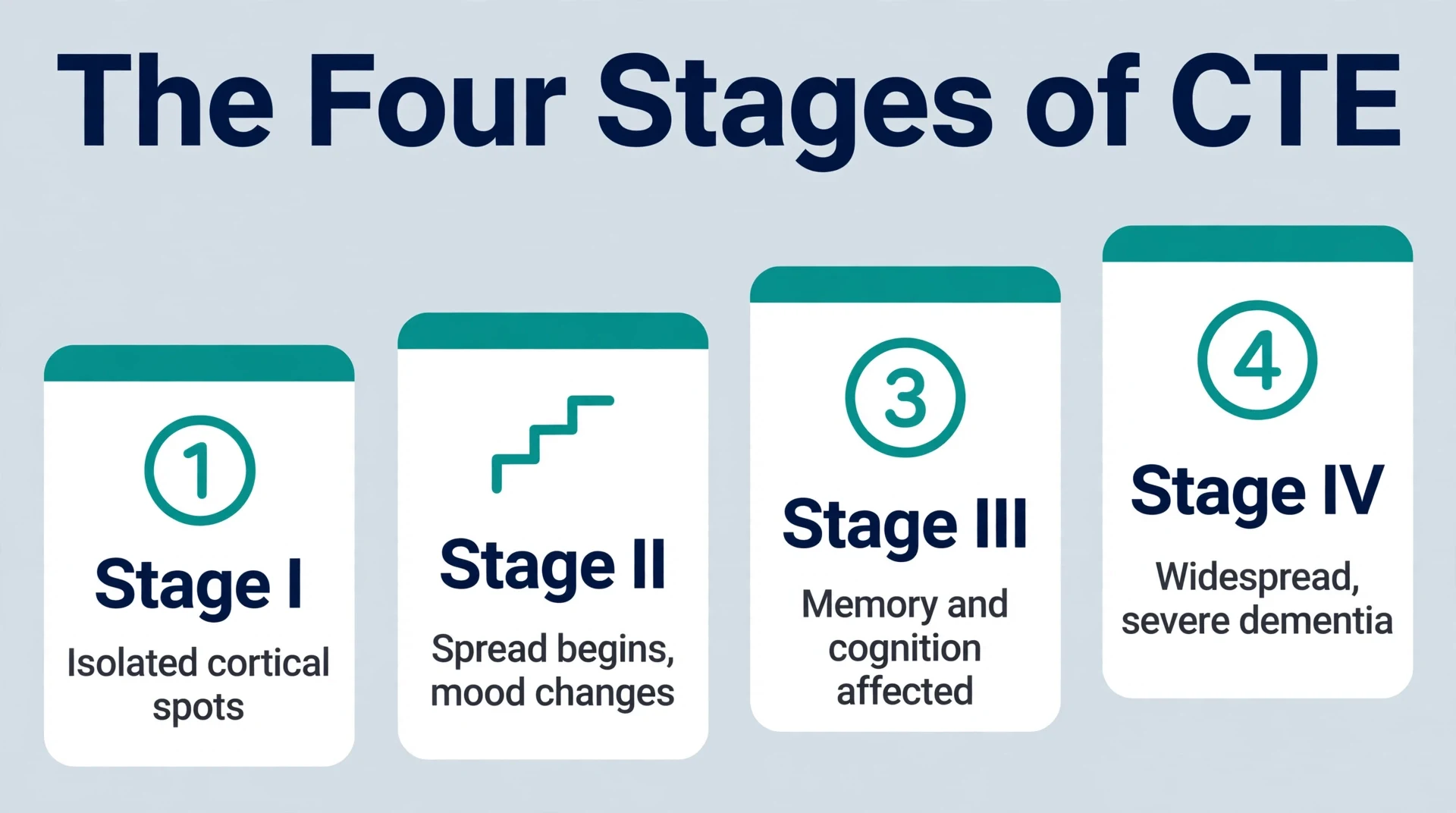
Because doctors diagnose CTE after death, they reconstruct its symptoms from the reports of families and the medical records of donors. And researchers describe the clinical picture in three broad families:
Mood and behaviour: depression, apathy, irritability, impulsivity, aggression, and in some cases suicidality. In the brain bank cohorts these often appear first, in younger donors, in their 30s and 40s.
Cognition: problems with memory, attention, planning and judgment, progressing in some cases to dementia, typically described later in the course.
Motor: in advanced cases, Parkinson-like features, gait problems, slurred speech and tremor, the same features Martland saw in his boxers in 1928.
The Four Stages in Detail
Dr McKee’s research stages describe the pathology’s spread, not a guaranteed clinical timetable. But they are the framework most accounts use. And the symptom summaries below follow the published staging descriptions:
- Stage I: tau deposits confined to isolated spots in the cortex. Often no symptoms reported; headaches and attention problems are sometimes described.
- Stage II: multiple cortical spots, beginning spread. Families commonly report mood and behavioural change, depression, impulsivity, explosivity, and in some cases suicidal behaviour.
- Stage III: widespread cortical involvement plus the medial temporal lobe. Cognitive impairment is now typical: memory loss, executive problems, apathy and depression alongside.
- Stage IV: severe, widespread pathology with marked brain shrinkage. Advanced dementia is typical, with profound memory loss, language problems, paranoia, gait disturbance and Parkinsonism in some cases.
The staging is a research instrument built from donor cohorts, and living patients are not assigned stages. For the living, researchers proposed criteria in 2021 for traumatic encephalopathy syndrome (TES), the clinical syndrome that may reflect underlying CTE pathology, combining a history of substantial repetitive impact exposure with cognitive and neurobehavioural symptoms and a progressive course. TES is explicitly a research framework for identifying people for study, not a diagnosis of CTE. And doctors may also find that a patient’s symptoms have other, treatable causes entirely. This is one reason the caution section of this guide matters.
CTE and Alzheimer’s Disease: How They Differ
Because both are tauopathies with dementia among their outcomes, people frequently confuse CTE and Alzheimer’s disease. And the distinction matters to families reading a brain bank report.
The pathology differs in pattern. Alzheimer’s tau tangles (paired with amyloid plaques, its other signature lesion) distribute through the brain in a characteristic sequence beginning in memory structures. CTE’s defining lesion is the perivascular cluster of abnormal tau at the depths of the cortical sulci, a pattern the 2016 consensus panel chose precisely because it distinguishes CTE from Alzheimer’s and from other tauopathies under the microscope.
The histories differ. CTE by definition requires repetitive head impact exposure in the history; Alzheimer’s arises without it. Age profiles differ too: the CTE donor cohorts skew younger, reflecting athletic and military careers, while Alzheimer’s incidence climbs steeply with age in the general population.
The early symptoms often differ in emphasis. Alzheimer’s classically announces itself through memory failure. The CTE clinical picture, as reconstructed from donor families, frequently begins with mood and behaviour, depression, impulsivity, explosivity, with cognitive decline following. This is an emphasis, not a rule. And the two diseases can coexist. Older donors not infrequently show CTE pathology alongside Alzheimer’s or other age related pathologies in the same brain, a finding researchers call mixed pathology. And one more reason we should resist single label explanations of a life.
Who Is at Risk?
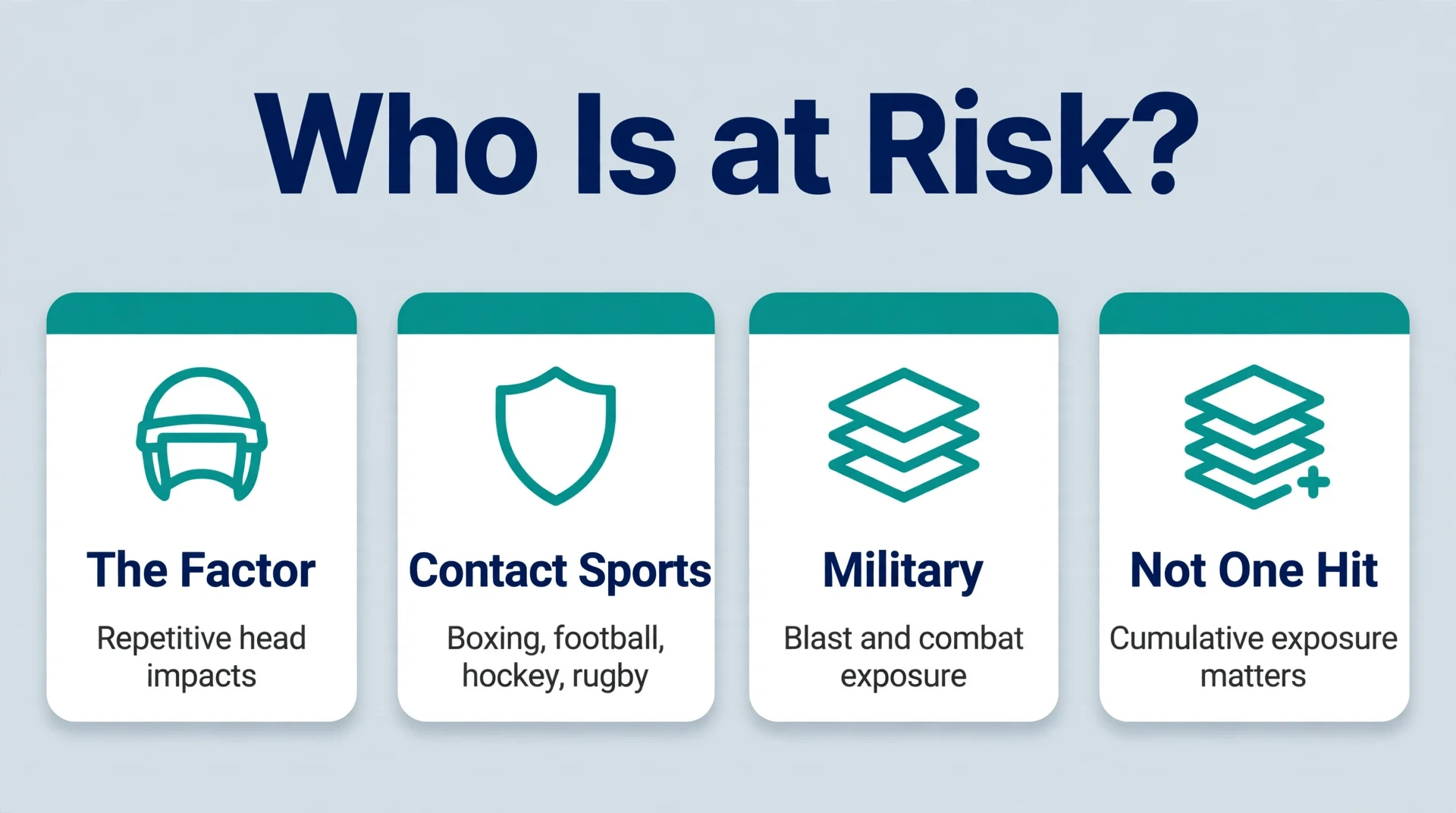
The documented risk factor is repetitive head impact exposure. And the populations in whom CTE pathology has been found follow from where that exposure concentrates:
- Boxers, the original population, and other combat sport athletes including mixed martial artists.
- American football players, the largest studied cohort, with pathology found across levels from high school to the NFL and severity broadly tracking years played.
- Ice hockey players, including enforcers and others with heavy impact and fighting exposure.
- Rugby players, both codes, in case series from several countries.
- Soccer players, in smaller numbers, a population researchers associate with heading the ball and with collisions. The landmark Scottish FIELD study (2019) separately found former professional footballers had higher rates of neurodegenerative disease diagnoses, though that study measured clinical diagnoses, not CTE pathology itself.
- Military personnel, particularly those with blast exposure and combat related head impacts, a cohort the brain banks study alongside athletes.
- People with repeated head impacts outside sport, including some survivors of domestic abuse, appear in the literature in smaller numbers.
Equally important is what the record does not show. A single concussion is not the exposure the definition names. And most people who play contact sports, including professionally, do not come to autopsy with CTE, in part because most never come to autopsy at all. Genetics, including the APOE gene studied across dementia research, the age impacts begin, position played. And plain individual variation are all under investigation as modifiers. The accurate sentence is: risk rises with cumulative repetitive impact exposure, individual outcomes vary widely. And science cannot yet score any living person’s risk.
The Concussion Question: Why the Count Is Not the Exposure
Readers reasonably ask how many concussions it takes. And the research answer reframes the question. The exposure variable in CTE research is not diagnosed concussions but cumulative repetitive head impacts, a much larger and mostly uncounted number.
A lineman in American football may sustain hundreds of subconcussive impacts in a season, helmet to helmet contacts, falls, pile ups, none producing symptoms, none recorded anywhere. Studies using helmet sensors have measured these loads in college and high school programs and found season totals in the hundreds to over a thousand for some positions. Against that background, a player’s official concussion count, often in single digits, is a poor ruler for their exposure. And studies accordingly find that years played and position predict pathology better than reported concussion numbers do.
This reframing cuts two ways, and both matter. It explains why some athletes with few recorded concussions show substantial pathology, weakening the reassurance that a clean concussion history is a clean bill of health. It equally explains why nobody can turn concussion counts alone into personal risk scores or headlines about individual players. The exposure is real, cumulative and partly invisible. The science of measuring it in a living person is still being built, sensor by sensor and cohort by cohort.
Why CTE Cannot (Yet) Be Diagnosed in Life
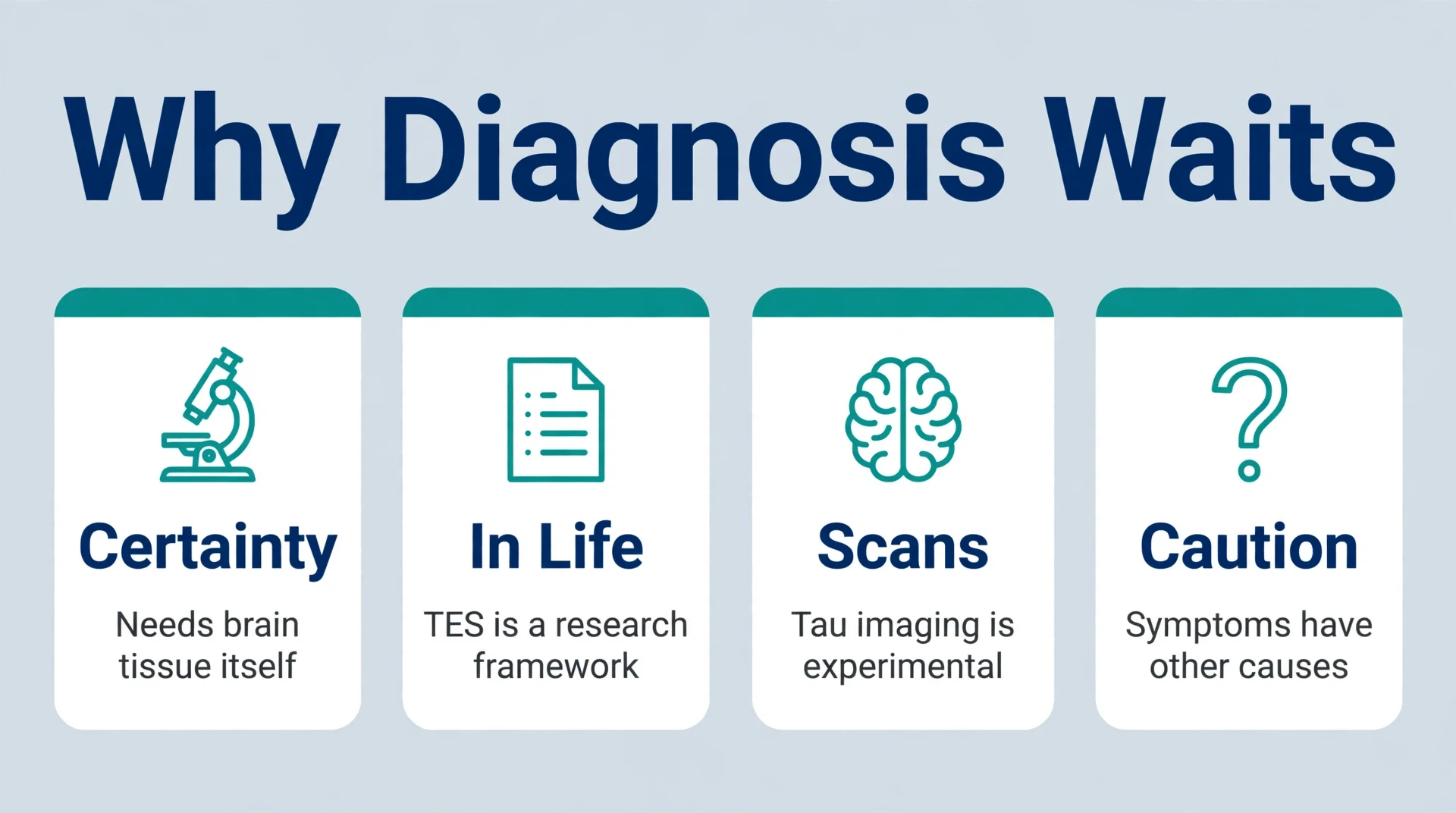
Diagnosis requires tau pathology in its specific pattern, seen in tissue under a microscope. A living brain cannot be sampled that way, so researchers are racing to build proxies:
Imaging. Experimental PET scans using tau binding tracers can show tau patterns in living brains. And some studies in former players show group level signals in regions matching the CTE pattern. None is approved for diagnosing CTE in an individual patient. Researchers largely developed the tracers for Alzheimer’s tau, which folds differently.
Fluid biomarkers. Blood and spinal fluid markers of brain injury and neurodegeneration are an active research front, useful for tracking injury and risk at group level, not yet diagnostic of CTE specifically.
Clinical criteria. The TES framework exists to standardise who researchers study, and consensus groups continue to refine it.
Until researchers validate a proxy against autopsy truth at scale, every statement about a living person “having CTE” is a probability statement wearing a diagnosis’s clothes, and responsible doctors say so. This is not a technicality: symptoms attributed to CTE overlap heavily with treatable conditions including depression, sleep apnoea, chronic pain, hormonal disorders and ordinary dementias entering their course. And treating what was actually wrong has helped people, sometimes dramatically.
Prevention and What Can Be Done
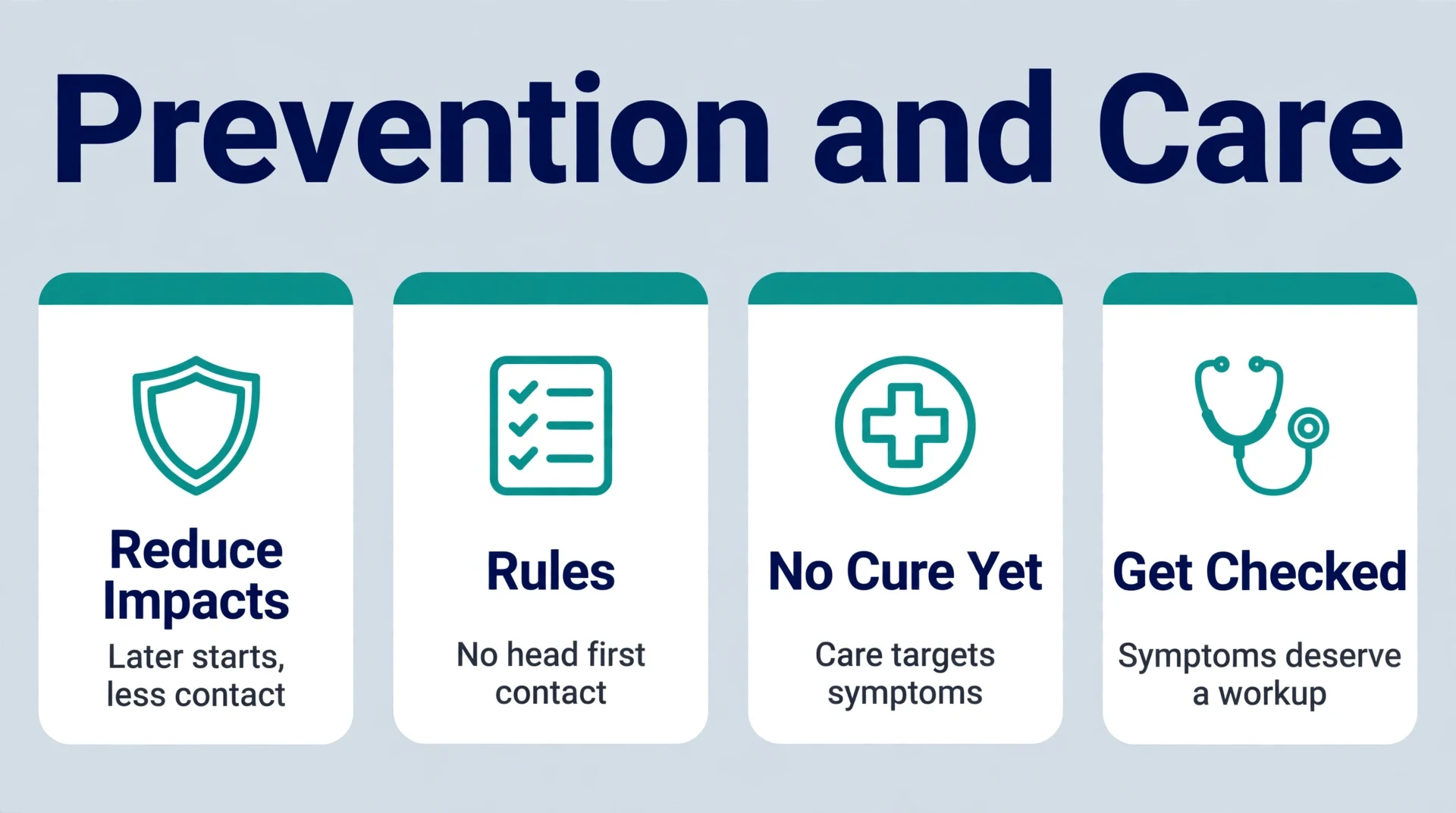
There is currently no cure for CTE and no treatment that halts its pathology. The levers that exist are prevention at the exposure end, and competent care at the symptom end.
On prevention, the field’s consensus direction is reducing cumulative head impacts. Delaying the age at which children begin tackle football and other high impact play (the brain bank data associates starting tackle before age 12 with earlier symptom onset in donor cohorts, a finding researchers continue to test), limiting full contact practice, enforcing rules against head first contact and removing players with suspected concussions. And improving recognition and management of concussions at every level. Helmets reduce skull fractures and some impact forces. No helmet has been shown to eliminate the rotational forces implicated in CTE. This is why rule and exposure changes carry more of the prevention argument than equipment does.
On care, people living with the symptoms described in this guide, whatever their cause, clinicians treat them symptom by symptom. Depression treated as depression, sleep disorders investigated, cognitive rehabilitation, support for families. And management of pain and other injuries from a playing career. The Concussion Legacy Foundation and the brain bank centres maintain resources and helplines for former athletes and families. And the single most repeated advice from clinicians in this field is also the simplest. Symptoms deserve a proper workup, because some of them have treatable causes. And none of them should be self diagnosed from an article, this one included.
CTE in Public Life: Settlements, Rules and Youth Sport
The science moved institutions before it settled. And the public record of that movement is part of the term’s meaning now.
In American football, thousands of former players sued the NFL over head injury handling. The resulting class action settlement, agreed in 2013 and approved by the court in 2015, created a compensation fund for retired players with qualifying diagnoses. And has paid out sums well beyond its originally estimated scale. The league, which in earlier years had disputed the research publicly, changed its concussion protocols repeatedly over the same period, adding independent spotters, mandatory evaluations and rule penalties for head first hits. College, high school and youth organisations rewrote their own rules in parallel, limiting contact in practice, where most cumulative impacts occur.
Youth sport became the sharpest policy front, logically enough, since it is where exposure begins and where consent is least the player’s own. Several United States state legislatures have debated bills to set a minimum age for tackle football. Few have become law, but practice restrictions for young players have passed in some states. And participation has shifted measurably toward flag football for younger children in many leagues. Comparable debates run in rugby and soccer, where governing bodies have introduced heading guidance for youth age groups and trials of lower tackle heights.
The policy pattern is consistent with the science’s honest state. Where the dose is unknown but researchers agree on the direction of risk, institutions regulate the exposure they can count, practices, ages, contact days, while the research that might one day set a threshold continues. Families making decisions today must, in effect, act on the direction without the number. This is precisely the situation this guide’s careful wording has tried to equip them for.
Documented Cases Readers Ask About
Two cases appear in searches constantly, and the documented record on each is short enough to state exactly.
Aaron Hernandez. The former New England Patriots tight end died in prison in 2017 while serving a murder sentence. Boston University’s CTE Center examined his brain under a research protocol. And in September 2017 the university announced that he had Stage 3 CTE (of the four research stages), described as severe for a 27 year old. Dr McKee, presenting the findings, included the caution this guide has repeated throughout. “We can’t take the pathology and explain the behavior.” The diagnosis is a documented fact of pathology. What it explains about a life is a question the researchers themselves decline to close.
Junior Seau. The Hall of Fame linebacker died by suicide in 2012. A National Institutes of Health convened team studied his brain, blinded to his identity. This reported in January 2013 definitive signs of CTE, consistent with the tau pattern of the disease as then characterised. His case, with Hernandez’s, is part of why the diagnosis question matters so much to families. Both men’s symptoms were visible for years. And in life, neither could have been given the diagnosis with certainty.
A Note on Sources, Symptoms and Getting Help
This article is an explainer built from the medical literature. The consensus criteria of NINDS and its partner institutes, the peer reviewed studies named in the text. And the public statements of the Boston University CTE Center and the Concussion Legacy Foundation. It is not medical advice, and CTE in particular cannot be self assessed. The symptoms described here are shared with many other conditions, several of them treatable.
If you or someone close to you is experiencing mood, memory or behavioural changes, especially after a career in contact sport or the military, the right step is a doctor, ideally one who will work the problem up properly rather than reach for the famous label. Former athletes and families can also contact the Concussion Legacy Foundation’s helpline for sport specific guidance. And if you are in crisis or thinking about harming yourself, in the United States you can call or text 988, the Suicide and Crisis Lifeline, at any hour. Readers elsewhere can find local crisis lines through their national health services. Help for the symptoms in front of you does not require settling the pathology question first.
Myths and Facts
Myth: 99 percent of NFL players have CTE. Fact: 110 of 111 is the count from a self selected brain donation sample, whose own authors state that prevalence cannot be concluded from it. The number proves the pathology exists at scale in that sample. It does not assign a probability to any player or to the league’s population.
Myth: one concussion causes CTE. Fact: the disease is associated with repetitive head impacts over years, including subconcussive blows. A single concussion is a medical event worth treating seriously on its own terms. It is not the exposure pattern in the CTE definition.
Myth: doctors can test for CTE now. Fact: no scan, blood test or clinical exam is approved to diagnose CTE in a living person. Experimental tools exist in research settings, and the TES criteria help researchers study suspected cases. A firm diagnosis still requires brain tissue after death.
Myth: everyone with CTE becomes violent or suicidal. Fact: the symptom families include mood and behaviour change, but donor cohorts are selected precisely because families noticed problems. And the majority of people with repetitive impact exposure, including many found to have CTE pathology, did not display the extreme outcomes that make headlines. Dr McKee’s caution stands as the field’s own: the pathology does not explain a person’s behaviour.
Myth: helmets have solved it, or nothing can be done. Fact: both extremes fail the record. Exposure reduction, rule changes, delayed tackle ages and better concussion management all act on the identified risk factor, while no equipment eliminates the rotational forces involved. Prevention is partial and real, which is the normal condition of public health.
Frequently Asked Questions
What does CTE mean?
CTE stands for chronic traumatic encephalopathy. It is a progressive, degenerative brain disease, a tauopathy, associated with a history of repetitive head impacts, in which abnormal tau protein accumulates in a distinctive pattern in the brain. It is found mainly in former contact sport athletes and military personnel. And it can currently be diagnosed with certainty only after death.
What are the symptoms of CTE?
In the donor cohorts researchers study, families report three families of symptoms. Mood and behaviour changes such as depression, apathy, irritability and impulsivity. Cognitive problems including memory loss and impaired judgment, sometimes progressing to dementia. And, in advanced cases, motor problems such as gait disturbance and Parkinson-like features. These symptoms overlap with many other conditions, several treatable, which is why they cannot diagnose CTE in a living person.
Can CTE be diagnosed while someone is alive?
No, not definitively. The diagnosis requires examining brain tissue for the specific tau pattern defined by the NINDS consensus criteria. Doctors may suspect it, and researchers use criteria called traumatic encephalopathy syndrome (TES) to study living people who may have it. But no scan or blood test is approved to confirm CTE in life.
What causes CTE?
The National Institutes of Health states that CTE is caused in part by repeated traumatic brain injuries. The exposure researchers focus on is cumulative repetitive head impacts, including subconcussive blows that cause no immediate symptoms, sustained over years in activities such as boxing, American football, hockey, rugby and military service. How much exposure is required, and why individuals differ, remains under research.
What are the stages of CTE?
Researchers, principally Dr Ann McKee’s team at Boston University, describe four pathological stages of increasing tau spread: Stage I isolated cortical spots. Stage II multiple spots with early spread. Stage III widespread cortical and medial temporal involvement, typically accompanied by cognitive impairment. Stage IV severe widespread pathology with brain shrinkage and, typically, dementia. The stages describe autopsy findings, not a timetable that can be assigned to a living patient.
Did 110 out of 111 NFL players really have CTE?
Those are the real numbers from the 2017 JAMA study of 202 donated brains (177 with CTE overall, 110 of 111 former NFL players). The critical context, stated by the authors themselves, is that families donated the brains, largely because they had observed symptoms. So the sample cannot estimate how common CTE is among all players. The study proves the pathology and its pattern; it does not provide a personal risk figure.
Is there a cure or treatment for CTE?
There is no cure and no treatment proven to stop the underlying pathology. Care focuses on treating individual symptoms (depression, sleep disorders, cognitive symptoms, pain) many of which have effective treatments whatever their cause. And on prevention: reducing cumulative head impact exposure through delayed starts in tackle sports, limits on contact practice, rule enforcement and proper concussion management.
Who was the first athlete diagnosed with CTE?
The condition was first described in boxers as “punch drunk” syndrome by Dr Harrison Martland in 1928, under the later name dementia pugilistica. The modern era began with Dr Bennet Omalu’s examination of Pittsburgh Steelers centre Mike Webster, whose brain Omalu studied after Webster’s death in 2002, publishing the finding of CTE in an American football player in Neurosurgery in 2005.
Can children get CTE from youth sports?
CTE pathology has been found in some young athletes’ donated brains (in a 2023 study, 63 of 152 donors who died before age 30 showed it), in samples influenced by the same donation bias as the adult studies. Researchers associate longer exposure, and starting tackle football before age 12 in donor cohorts, with worse later outcomes. This is why governing bodies increasingly promote flag football and delayed tackling for children. The honest summary is that the exposure is real and cumulative, the individual risk for any child is not precisely known. And reducing needless head impacts in youth sport is the precaution the field itself recommends.
Conclusion
CTE is a disease with a defined lesion, a century long paper trail from Martland’s boxers to the NIH’s causation statement. And a public reputation that runs ahead of its evidence in both directions. The pathology is real and its association with repetitive head impacts is accepted by the institutions charged with judging it. The numbers that would matter most to players and parents, individual risk, dose, prognosis, remain the honest unknowns of a young science.
And the most quoted statistic in the field arrives with its authors’ own warning label attached. What a reader can take from the record with confidence is the shape of responsible action. Fewer cumulative impacts where they can be avoided, proper care of concussions when they happen, serious medical attention for symptoms whenever they appear. And a refusal, in headlines and in life, to let a brain slide explain a person. The researchers who built this field repeat that last point most of all.